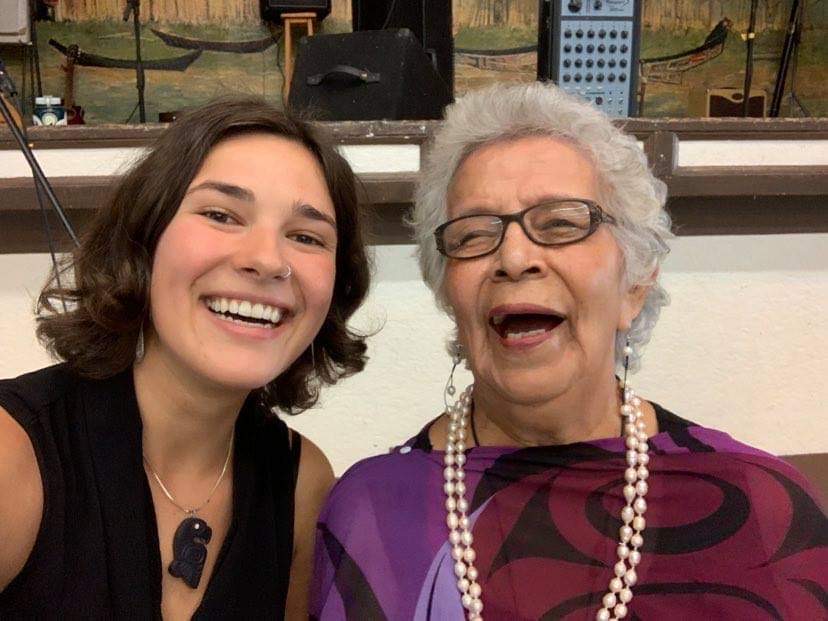
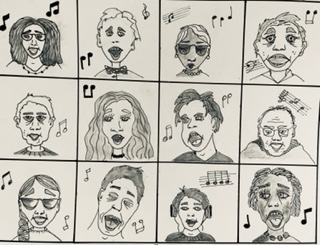
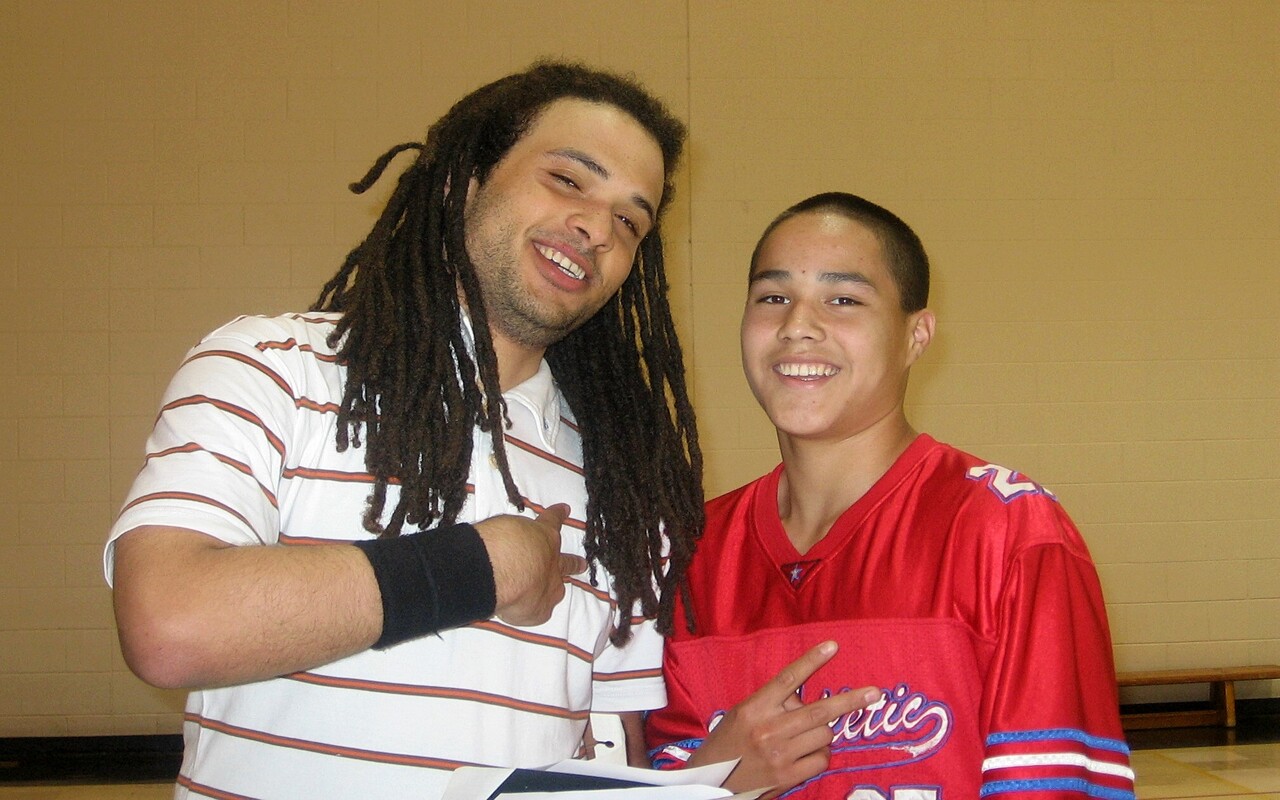
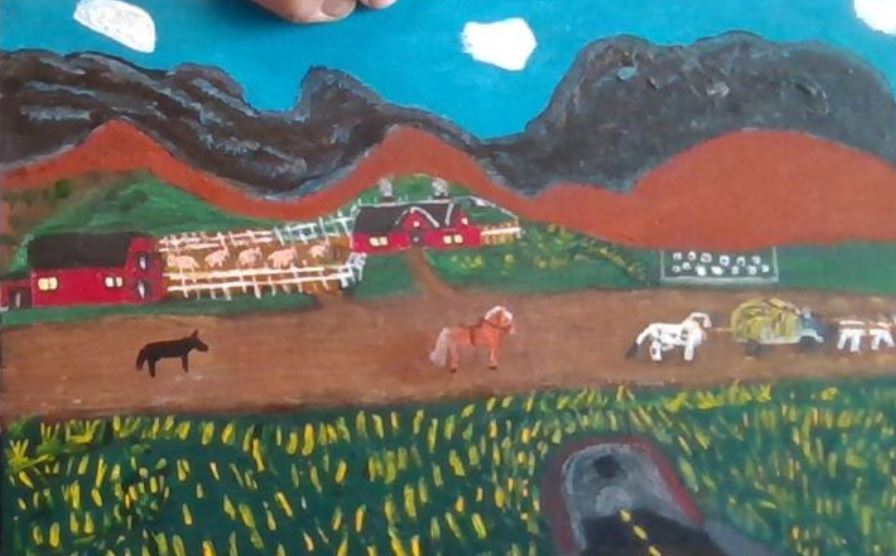
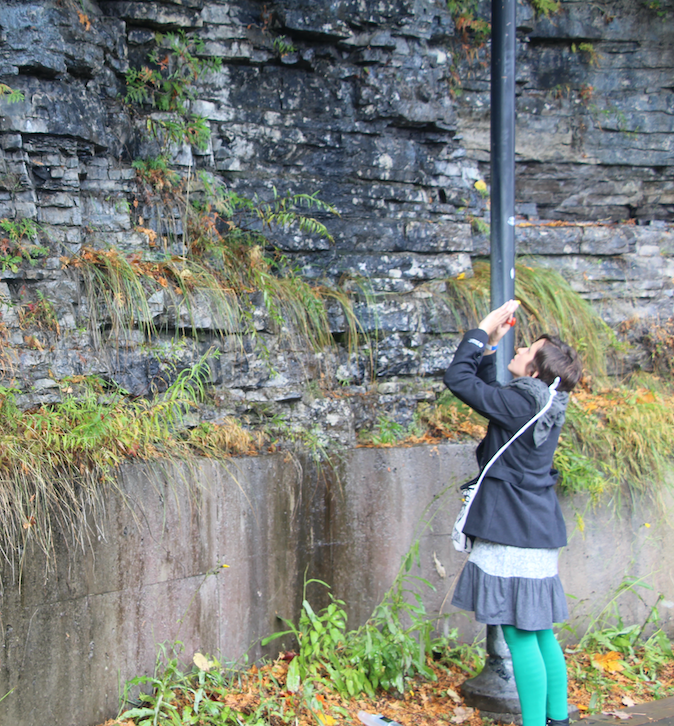
A music video project by the duo Siijuu Jaadas Cool Ladies, consisting of Haida Elder, weaver, and language teacher Jiixa (age 84), along with settler Julia (age 25). Julia makes the music and film for Jiixa’s language-sharing. The two share a deep bond and a sense of humour that communicates the Haida language in creative new ways. They are inspired by Haida laws and ways of being, by the power of food and laughter in bringing people together, and by the land and other beings that they share home with on Haida Gwaii.
Preserving Language Through Music and Film Behind the Scenes : Siijuu Jaadas Cool Ladies – Haida Language Rap Duo
By Julia Weder, May 2022
Intro : Here is a brief guide on how I approach making music videos with Haida Elder and language teacher Jiixa (Gladys Vandal), involving the Xaayda kil (Haida language, Skidegate dialect).
Quick context on the people involved : Jiixa is like a nanaay (grandmother) to me. Despite being an adopted member of her clan, Skidegate Gidins Naa ‘Uuwans XaaydaGa, it is not my place as a settler to claim a sense of ownership of the language. This language project was intended to support Jiixa in her own language-sharing and creative visions, as she is hugely motivated to share the language now that she is diagnosed with ALS and has limited mobility. As a resident of Haida Gwaii and someone committed to advancing Haida sovereignty and respecting Haida law on these lands, I see learning the Haida language as an important part of this lifelong commitment. I carry this gratitude and privilege with me throughout these creative projects with Jiixa. And gee, we have a lot of fun.
STEP 1 : Reflect on your place, responsibilities, and the nuances of your proposed project.
What is your positionality within the community or folks you are engaged with ? What are the proper protocols to follow when engaging with the Haida language (or any Indigenous language or cultural practice)? What are you doing to ensure you are moving beyond “good intentions” and practicing real self-awareness ? What is your knowledge on the topic, and what kind of authority do you have on it ? What is the quality of the relationships you have built ? Who has control over what is shared, and how ? Who benefits from (or is harmed by) the work ?
STEP 2 : Think of a theme or subject for your music video.
We thought of handy phrases that families on Haida Gwaii might use in everyday life – eg. around the house, in the kitchen, on a trip. We wanted to mix these in with expressions of love and friendship, as well as prayers and wise phrases from Haida Elders that have been preserved. We chose themes like “Food and Friendship”, “Traveling to the City”, and “Remembering Lost Children”.
STEP 3 : Have fun and experiment with film
We didn’t take ourselves too seriously at all when making these rap songs. At spontaneous moments – say, after a meal while sitting on the couch – I’d take out my iPhone and ask if Jiixa wanted to record snippets of video for our next rap song. “Sure!”, she’d smile. We didn’t worry about miming lyrics or anything in these snippets – we just grooved our heads or hips to an imaginary beat, maybe wearing a pair of sunglasses or a hat that was lying around.
STEP 4 : Work on the lyrics.
Jiixa wrote the lyrics for each of our songs, sometimes getting inspiration from Haida language books produced by the group of Elders involved in the Skidegate Haida Immersion Program. I would write down phrases or words that she’d speak out, and repeat them back to her until she was happy with the flow and content. Sometimes Jiixa wanted me to speak/sing the lyrics. Once we had the lyrics written, we’d audio-record ourselves on the Voice Recording app on our phones.
STEP 5 : Work on the music.
In GarageBand (free on Apple devices), I made simple beats from the computer-keyboard within the software (you can choose from a whole range of instrument sounds). I’d make a simple tune over top of a bassy beat, then I’d adjust the tempo of the music until it roughly matched the tempo of our speech / singing / lyrics.
STEP 6 : Edit
This is a fairly time-consuming process but lots of fun. I used free software (iMovie) on my Macbook to edit together the audio clips, video clips, and music. First I exported the song and lyrics from Garageband, and imported it into iMovie. Then I imported all the video clips and matched them up with the lyrics and music. We added intro and closing slides with our names and everyone who helped out with the project.
STEP 7 : Add subtitles / captions
It’s good practice to include captions in any video, regardless of language, so that it’s accessible to non-hearing folks. Since our videos are in Haida, and the goal was to help people become more familiar with the language and pick up new words and phrases, we’d spell out Haida captions in large font and English underneath, in smaller font.
STEP 8 : Share with the community !
We share our videos on Facebook and Youtube, and invite our friends and community to give it a watch. We hope that these videos help motivate others to tell stories and use the Haida language in their own creative ways.
Julia’s email is julia.weder@gmail.com. Feel free to get in touch !
Nathan Gage and his students describe and reflect on their creative work as musicians, bands and producers in their classroom recording spaces.
Here is a description of a secondary music program that draws upon popular music in an effort to engage students with meaningful music making experiences. The program’s emphasis on musical creation culminates in the annual release of an album-length “mixtape” of original songs which the students have created. Current and previous mixtapes can be found at www.upnextrecordings.com.
James Lyng music students choose between two “streams” to best match their musical preference and ambitions :
the “band” stream, with an emphasis on instrumental performance of rock and pop music, collective songwriting and recording
the “studio” stream, in which students work alone or in small groups on songwriting, recording or beat-making projects, usually, but not exclusively in the Hip Hop or R&B genres.
This is presented not necessarily as a model to imitate but an illumination of the possibilities of the many forms a student-centred, community based program can take in a curricular context.
Who
Hi, my name is Nathan Gage. I live and teach music in the south-west of Montreal, Quebec. James Lyng is a public high school that caters to a small, diverse student population, most of whom face significant challenges. Many of our students come from neighbourhood families living at or below the poverty line. Our school also hosts programs that give additional support to students with special needs and behavioural challenges. Approximately 80% of our student population is coded with some kind of behavioural or academic challenge. Here is a research article about our program.
When I first sought to create a music program centred around popular music, I came to the conclusion that if I wanted to hook my students, I needed to give them control in determining what sort of music-making activities they were carrying out, as well as what genres of music they were engaging with.
How
The initial infrastructure for the program was financially supported by a McGill University research project. A professional-quality recording studio was installed in the basement of our high school, and for the first three years of the program, the research project’s budget paid to hire producers / rappers with whom I collaborated in the education of my music students. Since the completion of McGill’s involvement four years ago, we’ve managed to keep the vision of the music program alive, through ever-changing sources of funding – various grants available to us because of our status as a “have-not” school, as well as pockets of funding from within our school board.
What it sounds and looks like
James Lyng Studio Creation
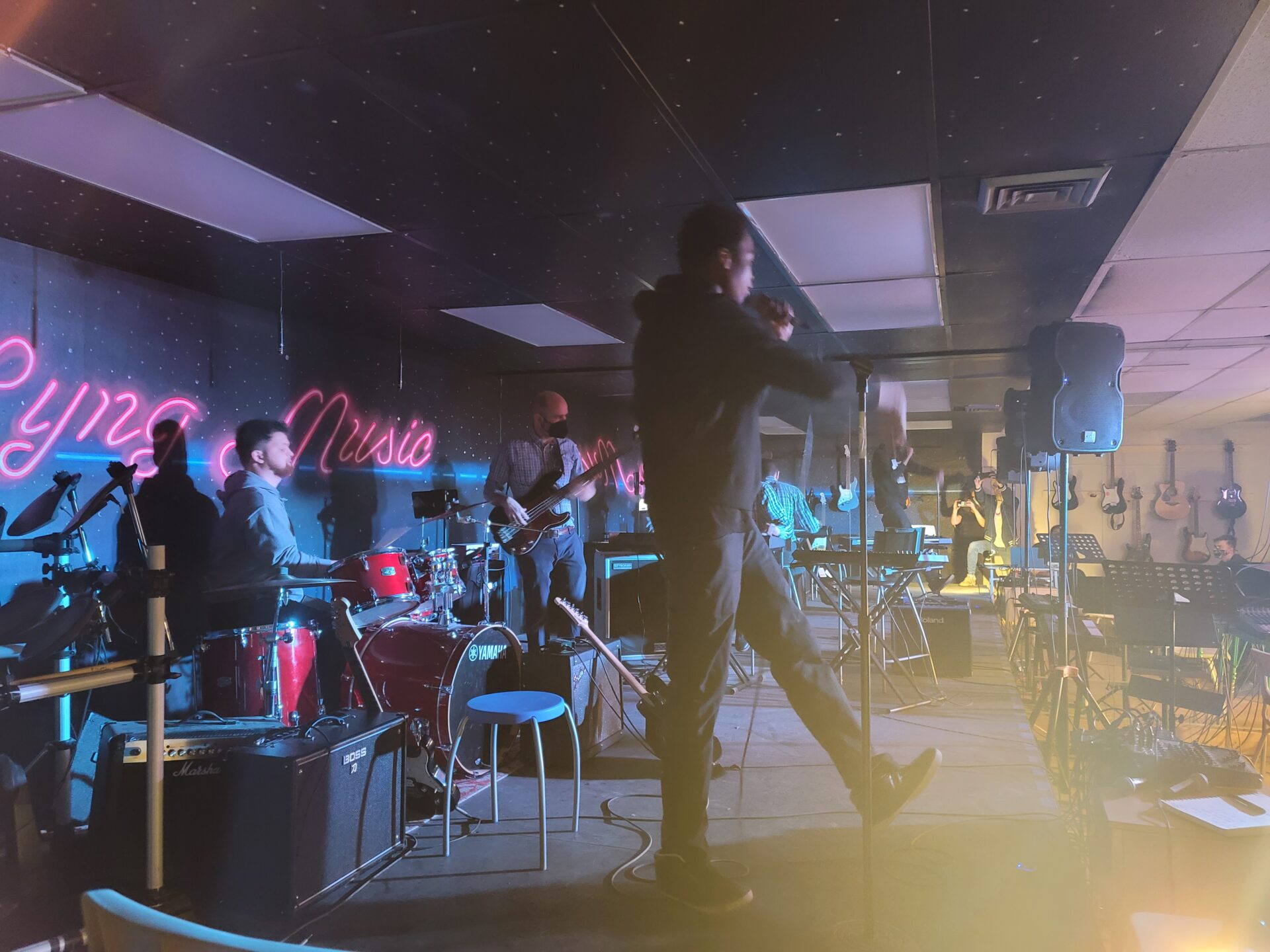
This video shows students at work in a typical class of our “studio” stream. Students working on the studio side work almost exclusively on music creation projects – either beat-making or writing and recording original songs. They work individually or in small groups.
James Lyng Instrumental Creation
This video shows a small portion of the creative work that goes in our “band” stream. While much of our school year is devoted to learning covers of pop and rock songs, each of our band classes will write and record a song annually to be included on the mixtape. Songs are written collaboratively by the whole group.
This video focuses on two groups. The first is my grade 7 class. The class had already composed chords and a riff for two sections of the song. One was a chord progression which we collectively composed by analyzing and rearranging the chords from Bill Withers’ song “Just The Two Of Us”. The class suggested and auditioned a number of combinations of the chords before voting on a final chord progression. A riff for the second section of the song was brought to the group by one of the class’s guitar players. The class had also collectively written four lines of lyrics based on their experiences in quarantine. To write these lyrics, they brainstormed a number of words and phrases based on the theme and used them to create a series of rhyming couplets.
The video starts with some of the students “MIDI-recording” melodies over a “mock up” recording of the two sections that I prepared. The keyboard has been recalibrated so that students can focus on the white keys to create their melodies. This is something I do with my youngest students so that their creativity isn’t stifled by technical considerations. Once all willing students have recorded, we listen back to the recordings and try to identify the best moments so that we can try setting our lyrics to the students’ melodies.
This video shows an interesting moment when one of my students latches onto a combination of lyrics (“I didn’t even know”) and melody and expresses that he thinks the lyrics should be repeated. Some of the other students object, as the repetition wouldn’t work with the lyrics that the class had already created. The students then have to find a resolution (collective song-writing at its best!).
The second group featured in the video is my Grade 9 class. Unlike the Grade 7 class, these students opted not to write lyrics until after they’d created some melodies. My Grade 9 students are more experienced and comfortable on their instruments. The chord progression was written by one.
What does successful music education mean at James Lyng ?
This is a video of myself and two of my students reflecting on what makes a successful music education in the context of a program focused on popular music and on student choice (Transcription June 27, 2022):
Nathan Gage : “As a music teacher, one thing that we often think about in the music education world, or as teachers in general, we think about what makes a good education. Then you start thinking about a person who’s well educated, what qualities or what have they learned, what makes them well educated, right ? So then, as a music teacher, you start to think, what makes a person well musically educated, what kinds of things do they have to know ? And I think traditionally, even some people still believe this, but there’s a kind of a set of rules set out by a bunch of like old white guys basically, saying, okay, you have to be able to read music, read traditional notation, you have to be able to play a musical instrument really proficiently, you have to know a bunch of Italian phrases, that kind of thing.
So then, for us, we do a popular music program and the whole point of the popular music program is that we take the cues of the students as to what they want to do musically. The idea is then, for me, when I think about what makes someone well educated musically, maybe there are some things that are maybe absolute, but a lot of it comes from what does the student want to do ? Where do they want music to kind of fit in their life after high school ?
So, my first question for you guys is what do you guys think makes a person well educated musically ? What kinds of things do you think could be there ? And then my second part of the question is, where do you see music fitting into your life after high school ? And as a school of Music, are we doing our part to getting you where you want to be ? Like, musically, for after high school ? You see what I’m saying ? So what do you think the first part is?”
Student #1 : “For the first part, I think being able to play with others or learning how to play with others is a very important skill. But I definitely agree with what you’re saying in that you don’t need to know how to read music in order to be like proficient in what you’re doing. But I do think that when we get more advanced, I think it definitely helps at least to know how to do some of these things. Maybe not read music, but like scales, or whatever, I think that’s important in what you learn how to do.
Nathan Gage : “And so you’ve been reading tab. You read tab, and I think you learned to do that here. Right ? And so do you think that’s important ? When we say reading music, it includes that, so say, do you think in the future you want to go on the internet and find a song and learn to play it ? »
“I think all those things are definitely a help, but you never really need to do those things if you don’t want to, because I think, really, what music should be about is just being fun for you. I think immediately once you have something that you need to do, it’s more of a chore and not something that’s fun. And that’s why if you’re not having fun doing music, you’re not really doing anything. It touches on what I was saying before. When you start to get more advanced, you think you start to know what you’re doing, then yeah, those things will definitely help but I don’t think it’s necessarily required if you just want to have fun playing music.”
Student #2 : “He basically just said everything. Everything that went through my mind, just came out of his mouth.” (laughs).
On Musical Creation at James Lyng
In this video, our studio animator, Jason Newcomen and I discuss why song-writing and music creation are so important to James Lyng’s music program, as well as our hopes for music education in the broader sense.
Nathan Gage : “I’m here with Jason Newcomen, who is our studio animator. He works on the studio side with our students who want to focus on hip hop and R&B music. I thought it’d be good to have him in on this conversation : what drew you towards creative music making in your own teaching practice ? Maybe I’ll start.
For me, I would say that it goes hand in hand with this idea of the popular music education program, it goes hand in hand with a program that’s trying to elevate student voice. Part of the popular music revolution was that the performer could be the songwriter, the performer could be the composer. It sets itself apart from classical music where you have the composer and you have a conductor and below them were the performers. It just flipped around, especially with punk rock music in the 70s, you know, the idea that you didn’t even have to play a guitar that well, you could just bring out a guitar and if the song had enough passion and the right hook or whatever, this is could still be a song that was still listened to 40 or 50 years later.
In my background as a musician, as a performer, songwriting and expressing myself through music has been so important to my own musical practice. I wanted to pass that on to my students.
On the instrumental side, on the band side, we also do a lot of learning to play our instruments through learning covers of rock and pop songs. On the studio side, almost all of what you do is creation. That’s all you do : songwriting, beat making, all that creation stuff.”
Jason Newcomen : “In the last ten years, recording equipment and recording software has been so accessible to everybody on the Hip Hop side to the point where the biggest Hip Hop artists in the world are making songs in their basement with the same equipment that we’re using. It’s an opportunity for the kids on my side to learn a skill that they can continue on their own time, and be passionate about on their own time as well. I come from an era where we had to save up to get studio time, you had to pay somebody who probably would make something different with our music. Just to empower the kids by telling them that this is something that they’re able to do on their own with very simple tools, and use it as an opportunity to exercise their freedom in creation and their freedom to express themselves.
Nathan Gage : “For me, I would say that’s very important. If we go back to the classical paradigm with the composer, the conductor, the performers, and how that is entrenched so much in traditional music education, think what that does to students. When we focus so much on music of the dominant culture, we’re really reinforcing that culture. You have to think for my students, for a student body that is very diverse, what that would do to them. It’s basically putting on a pedestal one culture and not their own, and how they would feel about that over time. That’s why I think it’s so important. I hope what we do and I think what we try to do at all times is to flip that paradigm so that it centers the students at the top of the paradigm, where the students” voice and the students” musical preferences are what is grounding all of their music education.
I do know that music education has done a lot of work in general and a lot of teachers are working hard to incorporate music from different cultures, but I still think that the structure inherent in that classical music paradigm is still very, very active in music education and it’s very difficult to get away from that.
For me, that’s why it’s really, really important to do these creation projects because just naturally when the student is doing the creation and maybe working through their own experiences or trying to express their own experiences through song, it naturally centers them so that their own experiences are what are validated.”
Bio :
Nathan Gage (he/him) is a music educator living and working in Montreal, Quebec. Having come to the profession later in life, he has a wealth of experience in the music industry, as a performer and as a composer from which he can draw. He holds a bachelor’s degree in music composition and has many years of experience as a professional jazz performer, playing upright and electric bass. He has toured extensively throughout North America and Europe with indie rock bands Shapes & Sizes (Asthmatic Kitty Records) and Elfin Saddle (Constellation Records). He founded, managed and owned Phonopolis, an independent record store, which the Montreal Gazette referred to as “an institution in the Montreal music scene.” He sold the store at the start of his teaching career. Nathan is passionate about popular music education and student-centered music education and he strives to continue his own education as a music teacher.
For more information, contact Nathan at ngage(at)emsb.qc.ca.
What does collaborative music-making mean to you ?
“I quickly realized that that was the point, in a way it was just to bring people together. I would arrive as myself where I was at as an empathetic human being and all of the members would meet me there with their individual life experiences and how they were feeling on the day. And we would engage with each other and the art that we would bring to the space. » (Artist, The Bitove Method)
Purpose :To use collaborative song-writing to understand what music means to people living with dementia, build and nurture compassionate relationships with people living with dementia, artists, volunteers, students and others, and challenge stigmatizing approaches used with people living with dementia.
The Project and Approach :Most approaches to music with people living with dementia are grounded in the bio-medical model or person-centered care. The biomedical model focuses on disease, symptom management, and functional outcomes, whereas person-centered care focuses on the individual and uni-directional interactions. Both of these approaches fail to capture the centrality of relationships to growth, quality of life and well-being. Our approach is grounded in relational caring, where we intentionally attend to relational processes and use music for life enrichment, as a means to support relational capacities for connection, and to foster compassionate and reciprocal relationships among diverse people. See the Translating Relational Caring into Relational Arts handout and short video clip called « Music and Relational Caring » for more information.
Music Takes You Higher originated as a musical co-creation between songwriter and Grammy award winner, Simon Law, and members of the Dotsa Bitove Wellness Academy (DBWA), now known as The Bitove Method. You can learn about Simon Law, the facilitator of our collaborative music-making process, in the short video clip « Meet Simon ». You can also meet some of the members living with with dementia that were involved in our process by watching the video clips « Meet Allan », « Meet Robert », and « Meet Sheru ».
The DBWA is an arts-based academy for people living with dementia where the arts are valued not as therapy or clinical intervention but as a medium for relational caring and life enrichment. The song was part of a larger project conducted by Christine Jonas-Simpson, Sherry Dupuis, Pia Kontos and Gail Mitchell and funded by the Alzheimer’s Society of Canada Research Program, to explore experiences of musical engagement and the meaning of music in the lives of academy members. The project culminated in the creation of a documentary film to capture those meanings and experiences and challenge the stigma associated with dementia. You can view the trailer or the full documentary film by clicking on the video links below.
Our Process :
Step 1 : Start with a relational activity that helps the members in your groups connect with one another. It could be as simple as playing recorded music or live collaborative music and then having a conversation about the music and what it means to them. Alternatively invite people to be involved in a sharing circle of curiosity where members contribute thoughts on how they are feeling and support each other in those feelings. Whatever activity you choose, use it as way to transition between what people were doing before arriving and their involvement in your collaborative song-writing session/class/engagement.
Step 2 :Begin the lyric writing engagement using a brainstorming session. You can explore any topic of interest to your group ; ours was what music means and we asked questions, such as :
« What does music mean to you ? »
« What is it like to have music in your lives ? »
« How does music relate to you ? »
Before you begin, explain what you are doing and why. Record all the responses on a flip chart. To embody the relational caring principles, you will want to be sure to include all members of your group in this creative process. To help members think about what music means, engage them actively in music-making through singing, drumming, dancing, playing ukulele etc., and then ask what that experience felt like to draw out more ideas of what music means to them. You can use whatever creative process fits your group and facilitates freedom to participate and express ideas in diverse ways.
Here are some examples of our members” answers to the questions that were asked :
« Music to me is like when you eat a nice piece of cake […]; it just comes to me and I just love it. »
« To me, music is the greatest equalizer because music lightens the room. »
« Music is my whole world. »
« [Music] makes you happy and takes the sad part away. »
« Music is soul connection. »
« Music is a message sent to the brain to enjoy happiness »
Step 3 : Collaborate in the writing of the lyrics. The responses to the questions (Step 2) and the brainstorming session(s) become the basis for the collaborative writing of song lyrics. Review the words, phrases and images recorded on the flip chart sheets, and invite members to look for common themes, words, and ideas, or quotes. Ask what ideas go together ; you may find one leading idea emerges. For us it was “music takes you higher”. This ideas stage, where you are exploring different words and lyrics is a key stage. This is your members’ own expression of an idea, which should always be central. Work collaboratively with your group to develop phrases based on common themes ; you can choose to rhyme or not. Your role is to open up paths to creative expression for people living with dementia and find ways to make their contributions work together.
Step 4 :Create the music, which you can do by starting with either the melodic line and then adding harmony, or with a series of chords. Depending on your familiarity with writing music you can choose for the melody to reflect the lyrics, or not. Start by asking the group ‘What emotions do you feel from our lyrics?’ ‘What emotions do you want our song to capture?’ Answers to these and similar questions help establish the tone and style for the music. This step can be undertaken collectively with a facilitator or working with a musician who creates the melody and then uses the collaborative process for feedback and development. Whichever creative route you take for the music, you will want to ask your entire group what they think of the melody line and be open to their suggestions and ideas for how it might go differently, leaving open the possibility of change and reassessment so that the music is owned by everyone. Active, careful listening, and repeating words your group is using will help you to embody relational caring.
Step 5 :Combine the music and lyrics, share, practice and “perform” with your group. Using the musical and relational talents within your group will support building connections and being open to mutual influences and learning. Invite your participants to share if they play an instrument (or have done so in the past) and look for ways to include that contribution. Include them in developing rhythmical riffs for the song, for example. Your community will sing their words from the heart. If you choose to record your song, the relational caring philosophy will guide you to include all members of the group, by embracing their abilities, supporting the creativity of your group, and remembering not to worry about any perceived inaccuracies. Simon describes more about our process in the video clips « Transformational Power of Music Making » and « Collaborative Creative Process ». Consider teaching your group Music Takes you Higher using the Karaoke Sing-Along version available below.
Tips and strategies for supporting relational music-making can be found in the Translating Relational Caring into Relational Arts handout.
“There’s a human connection, despite what some people like to think… Despite age or disability, there’s a humanness amongst all of us if you look for it. And that’s what we’re trying to do with this song.” – Wally Cox (Reimagining Dementia coalition member)
The Coalition :Reimagining Dementia : A Creative Coalition for Justice is an international group of dementia activists and allies, including people living with dementia, family members, professionals, artists, researchers, policy makers and others – all of whom share a vision of life, care and support that promotes inclusion, relationality, creativity, joy and the possibility of growth for everyone living with dementia.
The Project : Let’s Reimagine is a co-created song and video project that aims to challenge stigma, and show how people living with dementia can engage, connect and live a vibrant creative life in community with others. The song and video development process was facilitated entirely online by two-time Grammy award winning musician Simon Law, who also produced the song in collaboration with over 700 musicians, song-writers, people living with dementia, family care partners, and other members of the coalition from different parts of the world.
Guiding Principles :
Let’s Reimagine was grounded in two key participatory approaches :
1. Liberatory Arts : Liberatory arts uses the arts for social justice purposes to challenge assumptions, expose harmful practices and social relations, and imagine and effect new possibilities for addressing inequities and enhancing quality of life. Liberatory arts are participatory, inclusive of diverse (and all) voices, creative, dialogical, transformative, consciousness-raising, de-centring, communicative, and evaluative.
2. Authentic Partnerships : Authentic partnerships recognizes the capacities of people living with dementia and seeks to work in partnership with diverse stakeholders, including people living with dementia, to challenge stigma and promote inclusion and social justice for all people with dementia. Co-created with people living with dementia, the approach articulates what is essential to support and sustain authentic collaborative decision-making that is inclusive of people living with dementia (see the Authentic Partnership handout for more information).
Co-Creating Let’s Reimagine : To make this project truly inclusive of diverse perspectives, and to center the voices of people living with dementia, the song-writing and production process included the following :
A series of online arts-based and playful activities with coalition members aimed at identifying key messages to be reflected in the song. Drawing on the diverse talents of coalition members, we worked in small groups, using breakout rooms to discuss and creatively represent how they “re-imagine dementia” by asking : “what do you want the world to know about dementia?” “What does re-imagining dementia mean or look like for you?”
For instance, group members represented their discussions through poems, spoken word, art, and songs. You can try this activity with any group by asking them « What do you want the world to know about .…? », « What do you need to live well ? » etc. Then ask them to come up with images and words that reflect their answers to the questions. These images can be pulled together into a collaborative collage or you could work with the group to create a poem out of the words they come up with. The collage and/or poem can then be the starting point for a song.
Recording interviews with coalition members living with dementia to explore their experiences of stigma which were directly included in the song.
Collaboratively analyzing discussions and outputs produced during those activities/interviews which were used to inspired the lyric creation and the development of musical riffs for the song.
Working with people living with dementia and other members of the coalition to audio-record different parts of the song, prioritizing the voices of people living with dementia as soloists for the verses of the song.
Inviting coalition members, organizations, and broader community partners from around the world to share photos, video clips, and art representing what it means to live well with dementia that were then used for a music video to accompany the song.
Supports : The Coalition utilized the following strategies to support the collaborative song-writing process :
Forming a smaller song-writing committee (approximately 7 people) responsible for consolidating the ideas formed at the larger member gatherings, and drawing on these to create initial song lyrics. In an iterative process, ideas were shared with the larger group for feedback and used to help to develop the lyrics, and this process continued until everyone was happy with the lyrics.
Drawing on the diverse talents of members to creatively explore messages important to share in the song.
Drawing on Coalition member networks to bring in more perspectives, inputs and voices (i.e., reaching out to community choirs and musicians from different countries to sing and play parts of the song ; inviting members to share photos and videos of themselves, friends and/or family members living well with dementia ; partnering with therapeutic recreationists, life enrichment staff, and music therapists in day programs, residential aged care settings, and other programs to support people living with dementia in learning and singing parts of the song, dancing to the song, and/or creating artwork or placards that challenge the stigma associated with dementia and showcase the creativity of people living with dementia). To see examples please refer to the gallery.
Supporting members to learn about and navigate Zoom, and use technology to record parts of the song (i.e., hosting learning sessions on Zoom to practice the song and how to record it on different devices ; creating and emailing a handout to members with instructions on how to record vocals ; having 1:1 Zoom meetings with members who needed extra support in the recording process).
Considerations : Remembering the purpose and goal of this project while collaborating with over 700 people was challenging at times. For example, we found that having input from so many people generated many more ideas than could be reflected in the song, which made it difficult to ensure that all voices were included. We found it was important to remind ourselves of our authentic partnership philosophy and to engage in critical reflection about our priorities and objectives. With this reflection we re-affirmed the importance of centring the voices of people living with dementia in both the creation and recording of the song, which was pivotal to our decision to extend the project timeline to ensure that people living with dementia were featured as soloists in the song. You can hear about what it was like to be involved in this process for one of our soloists living with dementia by watching the short video clip « Inspiring Hope Through Collaborative Engagement ». Other members of our team share their experiences in the full « Launch Party » video. You can hear the song Let’s Reimagine and watch the video by clicking on the link to « Let’s Reimagine » below.
Broadening Engagement : To inspire broader global social engagement, we included resources on our website (i.e., song lyrics and audio files) for anyone who wanted to create their own versions of the song and/or video. For example, Reimaging Dementia Malaysia created their own lyrics and music video from the audio tracks provided on our website. We invite others to create their own or new versions of the song and share those with us. Please refer to the lyric sheet and audio tracks provided on this page.
Quotes From The Project :
« Everyone can thrive if we believe it and are bold enough to try it »
« I use music to chase away the brain fog on those days where I can’t really think straight. […] I do a lot of reimagining, especially on rough days, and it was great and a wonderful opportunity to do this. »
« What’s important is to […] go forward and be loved and love, and I think that this kind of thing shows that. »
« I hope that it brings about freedom, and education for those who have a stereotypical view of what dementia looks like and how it can be reassuring to turn it around to see how people can live happily […]; they can still express themselves and they can still have fun. »
« Music is such a powerful thing ; it’s just one of those things that goes into your soul […] and I wish more people would do this – discover things that they can enjoy, but that also brings them peace and calm. »
Through an inclusive and experiential lens, this project introduces Freestyle rap, participatory music, and improvised musicking through group skill building activities for digital artists, creatives, and the curious. Our participatory project brings together holistic approaches to art therapy, social constructivism, and non verbal communication using improvisational/ freestyle creativity. Skillsets crucial to all genres and mediums of contemporary art, with a specific value to arts educators, performers, dancers, musicians, singers, poets, rappers, visual artists and all creatives. Recognizing the many artists, employees and arts organizations, and their loved ones whose health and livelihoods have been disproportionately affected by the global spread of COVID-19, this project can be facilitated ‘live’ in person, as a hybrid, ‘teacher live / young artists at home” or asynchronously – at artists own time via free, step by step workshop download – available in HERE. “At Home with Ira Lee” is designed to resource BIPOC/Si2+LGBTQ creatives facing barriers such as ; limited access to meaningful educational experiences and opportunities and rural/ remote artists with limited broadband access.
*Please contact Ira Lee at lazers.are.sharpl@gmail.com if you’d like to know more about the project.*
Workshop Breakdown
Duration : 1 hour
Languages : EN/FR
Suggested ages – 5 to 12 years of age, 13 to 18 years of age, Adults, Seniors, Intergenerational
Pedagogy – Equity Centred Content/ appropriate for SI2+LGBTQ and exceptional learners.
Introduction : Who the fudge is ? (Insert instructor/ artist/ educator’s name, bio, history and highlights here)
(ReferenceSlide 2/pdf.)
What is Musicking ? (10 – min suggested, solo or in groups )
2.b Activity Description
Goal : Group discussion. What do you think participatory music, ‘freestyle’, and improvisational creativity means, why learn, and where to start ? Building on social constructivism discussion points, ask group for examples, opinions, and guesses. Then provide generic definitions, inclusive goals, and creative applications.
(ReferenceSlide 3/pdf.)
A beginner’s guide : Top 3 most important tips to successful improvisation
3.b Goal : Review and discuss. (5 minutes, group discussion)
4.b Goal, Review sample (3:00 minutes)
‘Do yourself, the creators truth’s’ – Sam and Ira Lee’s (‘Do yourself’ freestyle storytelling vs instrumental improvisation) FREE DL/ ‘LINK HERE’
(ReferenceSlide 4 in pdf)
4.b Activity : Learn to Let go (20 mins total suggested time, solo or in groups, no ‘isms’ ie : sexism, racism, tokenism, ableism, etc. )
Activity Description/ Goal
For three minutes, try to rap, rhyme, sing, dance, or improvised – for 3 minutes straight, out loud. If you make a mistake, keep going, for 3 whole minutes. Try your best, and practice having fun, making hilarious mistakes, and experimenting with ideas, the tone, rhythm and energy of your voice, and try to improvise a story / concept that is completely spontaneous ! (solo, no rhythm, beat)
Now - For three minutes, try to rap, rhyme, sing, dance, or improvise in groups of two or more – for 3 minutes straight, out loud. If you make a mistake, keep going, for 3 whole minutes. Try your best, and practice having fun, making hilarious mistakes, and experimenting with ideas, the tone, rhythm and energy of your voice, and try to improvise a story / concept that is completely spontaneous ! (no rhythm, or beat)
ADVANCED
For 3 minutes, try to rap, rhyme, sing, dance, or improvise in groups of two or more – for 3 minutes straight, out loud, to a rhythm or beat, or musician, or even a beatbox ! If you make a mistake, keep going, for 3 whole minutes. Try your best, and practice having fun, making hilarious mistakes, and experimenting with ideas, the tone, rhythm and energy of your voice, and try to improvise a story / concept that is completely spontaneous !
c) Goal : Review and discuss favourite moments, funniest moments, best mistakes, pain points and overall feelings about the last two minutes of improvising in small . large groups.
( ReferenceSlide 5.pdf.)
5. I wish my favourite popular artists weren’t racist, sexist, homophobes.
Activity sample/ review/ video – Sam and Ira Lee’s (‘Digital Literacy vs. Computer Science) FREE DL/ mp4/wav ‘LINK HERE’
5.b Activity Description : Group discussion. Responsibility, accountability and personal power in art. Discussion points, ‘appropriation, racism, sexism and discrimination, and how taste/ style/ originality, and honesty serve to grow artists beyond stereotypes, and remove barriers for all to create.
Thought starters –
Ask the group for examples of favourite dancers, singers, writers, poets and artists.
Ask the group to name their favourite underground Canadian artists.
Ask the group for their favourite local/ artists in the city.
Discuss– if and how digital literacy and STEM can play transformative roles in both skills development, access to education and professional development tools, branding and reach skill sets, and how to create more opportunities to use your art to make a sustainable difference in your community – digitally and in person.
5c. The Fugue State vs. The Flow State Review and discuss slide (5 minutes, group discussion)
(Reference Slide 6 in pdf)
6. No BS Challenge (20 mins total suggested time, solo or in groups, no ‘isms’ ie : sexism, racism, tokenism, ableism, etc. )
What you need – Any kind of recording device ie : PC, Cellphone, computer mic, etc) and
your favourite beat, rhythm, instrument, or song ! (to dance, paint, or participate with)
Activity Description
For thirty seconds, try to rap, rhyme, sing, dance, or improvise – a story. With at least one character, one location, and one problem – not using any derogatory language. Don’t be afraid to make a million, a billion mistakes. The only goal is to do your best, and not stop improvising for 30 seconds.
Now - For 1 minute, try to rap, rhyme, sing, dance, or improvise – a story. With at least one character, one location, and one problem – not using any derogatory language, while recording it. Don’t be afraid to make a million, a billion mistakes. The only goal is to do your best, and not stop improvising for 30 seconds.
Finally ! – for 2 full minutes, try to rap, rhyme, sing, dance, or improvise – a story. With at least one character, one location, and one problem – not using any derogatory language, while recording it. Don’t be afraid to make a million, a billion mistakes. The only goal is to do your best, and not stop improvising for 30 seconds. Then, listen either in small groups, or privately. GOAL : Learn to get used of your voice, find your favourite parts, favourite moments, and hear yourself the way the world does.
6.b Non Verbal Communication in freestyle rap, participatory music, and improvised musicking
Activity Description
Watch Sam and Ira Lee’s (I had a pretty weird week) FREE DL/ mp4/wav on the CMC youtube channel ‘LINK HERE’
Break into groups of two and practice telling a story with no words. Using facial expressions, space, actions, movement and emotion ! Tell a story, with no words !
Discussion point – How did this activity make you feel ? Was it more difficult to participate ? Do you feel all people who communicate differently deserve a chance to communicate how they choose ? What are some of the ways we can learn to listen, and listen to learn ?
At home with Ira Lee END
Freestyle rap, participatory music, and improvised musicking – Skill building for digital artists, creatives, and the curious.
Thank you for your time and for having fun learning and doing with us ! For more free arts, culture and development resources, please see therealplains.com.
This project brought music to residents of Columbia Forest Long Term Care (LTC) during the COVID-19 pandemic, a time of incredible unpredictability, isolation, fear, and change. The project transformed into using music to bring together LTC staff, residents and family members in a stressful time where there was more focus on “distance” than unity.
The Project Goals were :
To create a sense of unity and belonging
To unite and bring together residents and staff in long term care (LTC )homes
To empower residents in expressing themselves through musical creations
To encourage and empower staff to use music throughout their work day
To use music as an opportunity for staff and residents to engage and relate to each other
To use adaptable music experiences when needed to fit an ever changing environment
This project happened organically, but in 3 phases.
1. Phase one : Using Music to bring Residents together.
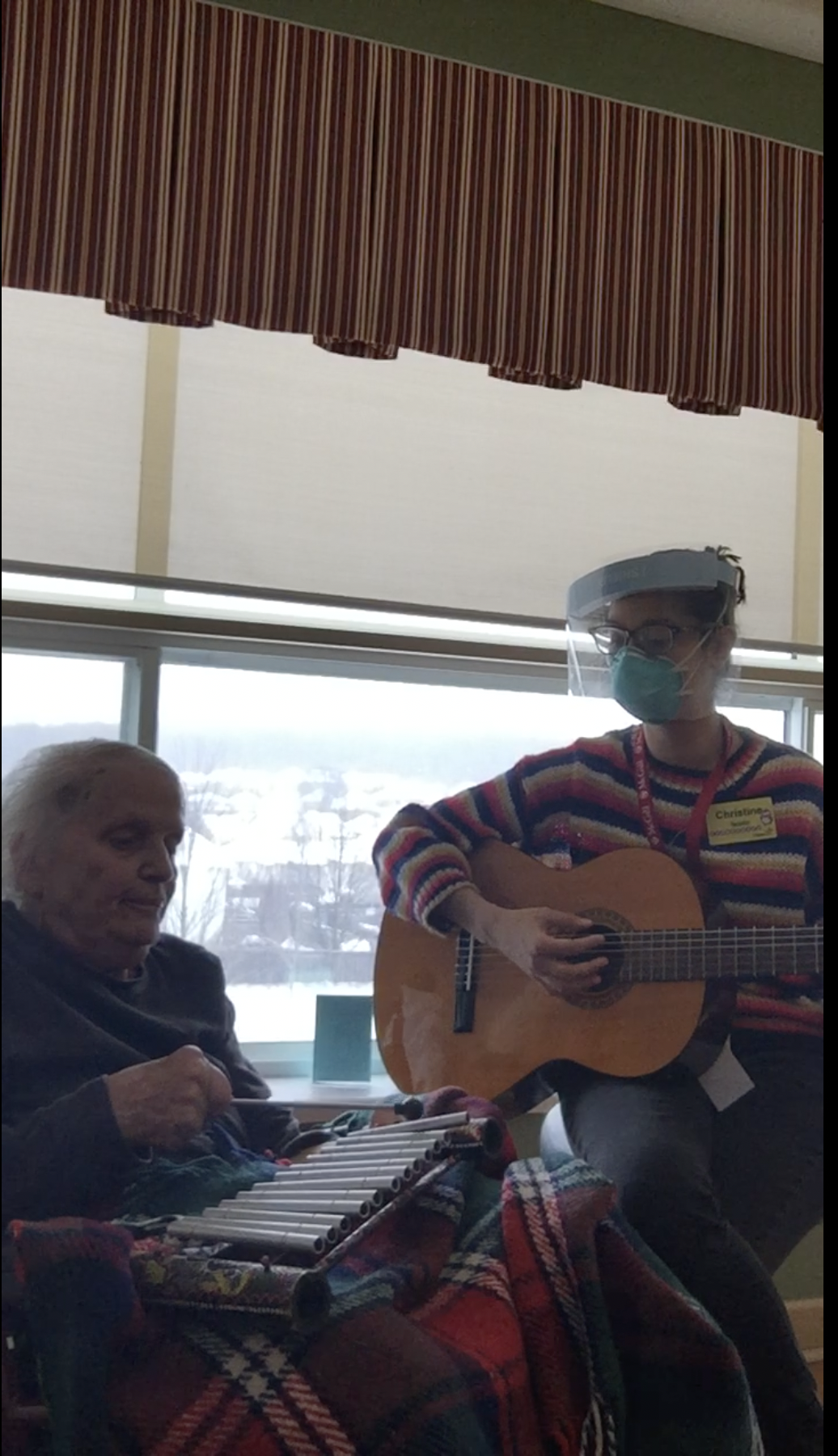
In this phase, musical experiences were used as a forum to encourage social engagement. Weekly music groups were conducted for the residents by a trained music therapist who was working in the recreation department. The music groups provided various interventions such as singing familiar songs, instrument playing, and movement to music and were created to fit the needs of the residents. Music groups included a weekly bell choir which brought together residents from the same floor but different units. Please see the video below to watch an excerpt of the bell choir (.13sec) .
2. PHASE TWO : Music experiences for the residents and staff/family caregivers in individual settings
When groups were not allowed due to COVID infection control policies, music experiences for residents were created in individual settings. Staff and family members were encouraged to engage and participate with the residents when possible. Personal Support Workers ( PSWs) and I collaborated to sing together for residents individually. Please see video for an example of collaborating with a PSW to bring a special musical experience to a resident in their room (.58). Music was also incorporated in family video calls with residents which allowed residents to engage in music with their loved ones even through the distance. One family member shared that the music in the video calls were comforting and important.
« The video calls were a challenge for my Mom as she was not used to them. Whenever there was music as a part of the call, Mom would stay on the call longer and it was a wonderful experience for me at home to watch her sing. »
3. PHASE 3 : Music becoming part of the LTC home environment
In this phase, music organically became part of the LTC environment. Staff musical preferences and different instrumental music was played during resident meal times ( breakfast and lunch) on iPads and Wonderboom speakers. This not only allowed for a more pleasure experience the residents, but also allowed the staff to enjoy some of their favourite music at work. It allowed for staff to bond over some of their favourite songs as well and increased the enjoyment of the workday. Music in the LTC became more community focused and all those involved in the home were welcome to engage in musical activities with residents : housekeepers, nurses, family caregivers and private formal caregivers. Music became part of events in the home such as staff bonding activities and celebrations. This was highlighted when residents and staff collaborated in choosing music to sing for a nurse retirement party ( see video expert at 2.52).
Required supplies needed :
Handbell set
Various percussion instruments
keyboard
guitar
A device to play recorded Music ( iPad and Wonderboom speakers were used)
This activity introduces participants to creating music by paying close attention to the quality of another person’s movement.
The activity develops the ability to listen and notice one’s responses to the surrounding world. In fact, one’s mind, one’s imagination, one’s senses, always respond to external stimuli. Silent Rhythms is an example of a viable way of giving voice to such personal and unique responses.
Silent Rhythms is an extremely versatile activity. I shared it with very young children (5–6 years old) and elders ; with teenagers and adults ; with people in situations of mental vulnerability and former prison inmates.
The clips forming the video tutorial are taken from a workshop for dancers. That workshop aimed specifically to provide that community with tools to bridge dance and music creation. Although every dancer had an intimate connection to music through movement, often they were oblivious as to how to translate the movements of their body into an embodied kind of sound production. The following process helped them do just that :
Steps
“Listening with the eyes”
Participants organised in a circle, each person standing a couple of metres from the people next to them. Participants are invited to “listen with their eyes » to what is about to happen. The whole activity takes place in silence. Each individual, in turn, steps a little forward closer to the centre and performs a repetitive movement with their body. The person performs the movement a few times and then stops and walks back to her or his place. At that point, the next person steps in and performs a new movement, and so on until everybody performs a silent body pattern.
At the end of the circle, the facilitator would ask the participants if, by « listening with their eyes” (meaning : by paying close attention to the quality of the mover’ movements) they heard anything in their imagination. Usually people express that indeed they heard something.
Voicing
At that point the facilitator performs a repetitive movement and invites a volunteer to give voice to what she or he “hears” with their eyes. In turn, the facilitator asks different people to give voice to the same movement.
After this demonstration, the group goes back in a circle and repeats the exercise from the beginning. Yet, this time, the person opposite in the circle to the person moving, voices what she or he hears by “listening with their eyes”. The sequence usually proceeds following this order : a person steps in the circle, starts performing a repetitive movement (the mover). After a little, the person in the circle opposite to the mover will start singing what she or he hears (the singer). When the mover stops, also the singer stops, and the activity moves on to the next couple mover/singer.
Debriefing
The experience is followed by a debriefing to allow participants to express the emotions, thoughts and considerations produced by the experience.
These are some of the observations offered by participants in the past :
Each person “hears” the movement differently
Interpretations can differ greatly and yet it is evident a clear relationship between the movement and the sound was created
Each interpretation feels unique and legitimate
The singing appears to be the product of a partnership between mover and singer
People at times point out the effortlessness of the process. Others observed that a person’s voice can emphasise and make apparent details of a movement that would have passed otherwise unnoticed to them.
I personally observed also that more expressive movements usually offered more inspiration for the singers, as if a movement full of intention communicates more information.
Further Developments
Silent Rhythms offers different lines of development. While I encourage each facilitator to follow their intuition and further develop this activity in their own ways, here are two possibilities that I often use.
Multiple people voice one person’s movement. The activity proceeds exactly as described above in the “Voicing” section. Yet, after the first person begins to voice the moment, the person in the circle standing next to him or her will add her or his voice too. I invite the second singer either to express parts of the movement that the first singer left out, or maybe by capturing with the voice a different quality or aspect of the movement. There is also the option of adding a second voice that does not refer anymore to the movement but that simply responds to the first voice. Up to four voices can be added per mover.
Movement-to-Voice-to-Movement. In this variation, the sound produced by the singer is the inspiration for a new movement performed by a second mover. In this variation the participants are displaced in a line : the first mover faces the singer, while the second mover is shoulder to shoulder with the singer (in order to not see the movement of the first mover). The sequence can be video recorded and the three participants can watch it afterward and compare the continuity and divergences in the interpretations of movement and voice.
Deeper Implications
In people’s appreciation of this activity I discovered something beyond its intended purpose. Most times a sense of relief and a soft sense of excitation pervade the space.The common sentiment is well expressed by participant Nadia Stevens : “It is nice to see and recognize my movement in a person’s voice.”
A similar feeling was expressed by former inmates at a workshop for the association Communitas, which supports former prisoners” reintegration in society. The organiser of the gathering Jeri expressed that Silent Rhythms produced a soothing effect of mutual recognition between participants, which was precious for this specific community of people at risk of social isolation.
Hannah Arendt says that we cannot know who a person is by gauging what a person does. Who a person is can instead be discovered only by attending the person’s specific way of moving or acting, speaking or interacting. Yet human beings are also confronted by the conundrum that no one can see himself or herself from the outside. We can only see ourselves reflected in the behaviour of the people who interact with us. I believe that this activity makes evident the webs of reciprocity that entangles the people in a group. Silent Rhythms invites people to intentionally and playfully look at others” ways of moving, paying attention to details, and therefore opens the possibility for a sense of recognition and encounter.
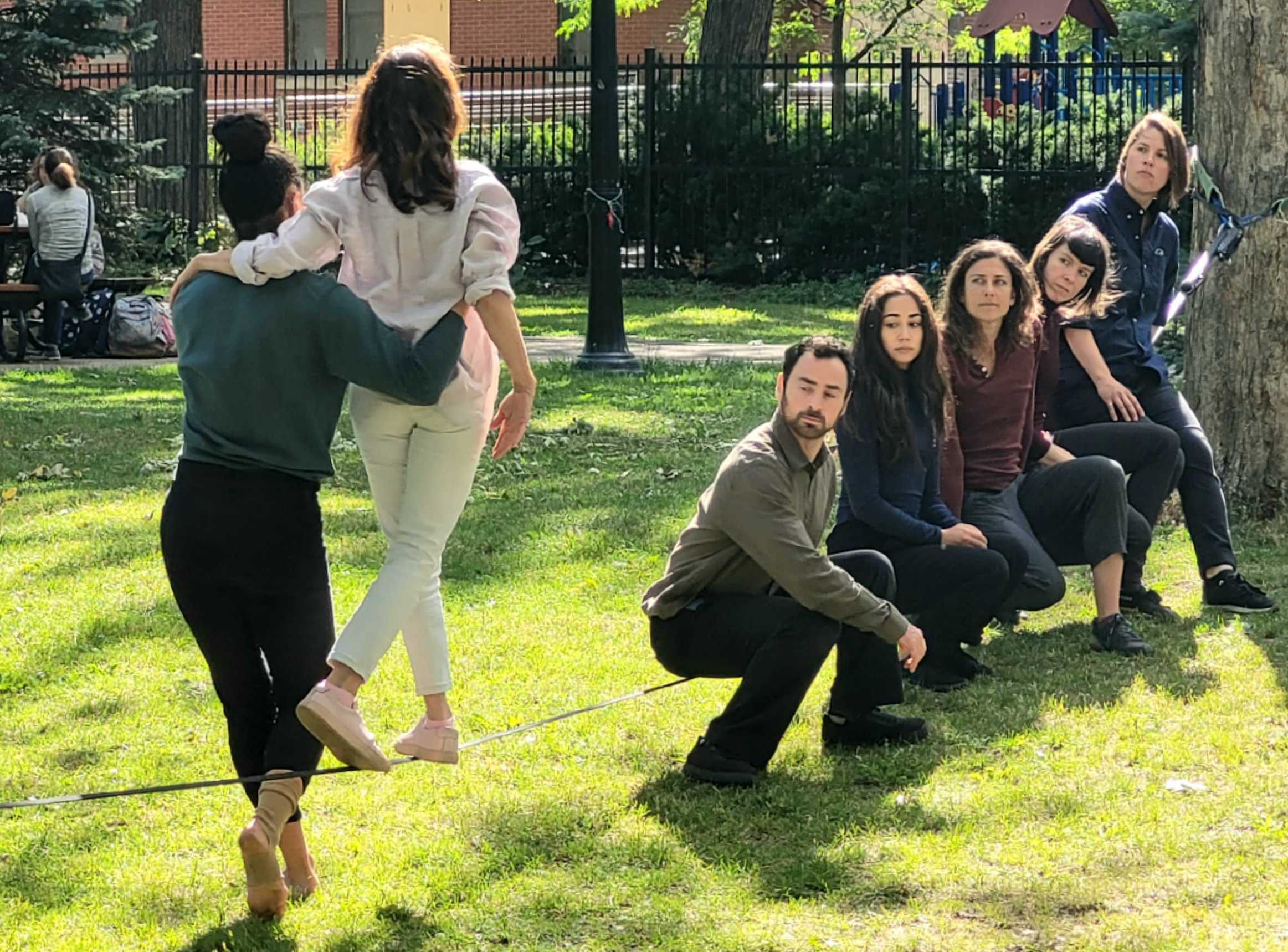
Within the context of the Piece of Mind project (details at the bottom of the page), we describe a collaborative activity in which we translated a poem about the lived experience of Parkinson’s disease (PD) to music and then put it onto the stage. In collaboration with the author Lili Saint Laurent, musician Caroline Barbier de Reulle initially composed a song based on the original text, and by drawing inspiration from exchanges with other Piece of Mind participants. The creative process then went through several iterations, including incorporating the many voices of our project, and becoming the starting point for the final scene of Piece of Mind : Parkinson’s.
Below we break down our process of co-creation, with the hope that it can be adapted to other texts and contexts.
Activity Breakdown
Goal : to depict a lived experience (in our case, Parkinson’s disease) using different forms of artistic expression. We aimed to add new dimensions to the initial text by mixing different artistic styles and points of view, while remaining true to its original meaning.
Where : On a virtual platform such as Zoom, through direct messaging, and/or in person.
Duration : Plan for a minimum of several ~1–2 hour sessions, spread over multiple weeks or months. This type of collaborative process requires time to build relationships and listen to all participants.
Participants / Target Audience : In our case, this activity was carried out in a collective including people with lived experience of PD, caregivers, neuroscientists, dancers, circus artists and musicians. This activity could be adapted to other groups.
Group size : We suggest that the primary collaboration be between 2 to 4 people (small group), in order to ensure that meaningful communication can be established and that the exchanges will be fruitful.
Instructions :
Choose a work (a poem or other text) that fits your final objective and represents the spirit of the project, while considering the musical possibilities. In our case, the poem « Sur le fil » by Lili Saint Laurent, a woman living with PD, became a common thread for our group as it created a natural link between the lived experience of PD and the circus arts through which we wanted to depict it.
Take the time to listen to and understand the piece. Ask yourselves what it means, what key feelings or messages are conveyed in the work, and which musical elements might best correspond to the desired feeling. Based on this reflection, the musician can compose and propose an initial musical interpretation of the text.
Following this initial proposal, plan an exchange between the musician and the author of the text so that the latter can express his or her reaction to it. This will allow the author to have an idea of the musical style proposed, and to verbalize what works and what does not. Be open to experimenting with possible avenues, and going through several drafts and iterations – sometimes you have to go in the wrong direction at first to find a common path ! As an example, have a listen to the first and second version Caroline proposed here.
Once you are happy with the combination of text and music, share it with the other artists, to allow them to form their own associations with it. If you are working in a group, find ways to incorporate the other perspectives or ideas so that the work becomes a collective effort. In our case, this meant integrating all the participants” voices into the soundtrack, and adjusting the musical composition to fit the choreography for our performance. You can check out the final version of the song here, and see the corresponding scene here.
To learn more about the creative process of producing this piece of music, and hear directly from Lili and Caroline, check out our little vignette (primarily in French) here.
Quotes (translated from French): “When I wrote the poem, it was with the idea of physically transcribing the impermanence of my life with Parkinson’s disease. Every movement, every thing that I would do took on a new importance, recognizing that where I would be in the next moment was unpredictable. » – Lili Saint Laurent
“My first proposition to Lili was a melodic song – with piano, voice, verses and a chorus […] I sent it to her, and she said : “Listen, your song is very lovely, but it doesn’t correspond to what I feel and how I live in my body.” » – Caroline Barbier de Reulle
“This poem kept coming back to me, because it illustrated the theme of the project so well. So at the end of a Zoom session, I asked : “could I read something to you?” For me, it was just a little offering… but it touched everyone so deeply, and kept coming up in discussions afterwards, so it ended up being a narrative thread for the performance. » – Lili Saint Laurent
“[…] What could correspond best to what Lili explained to me regarding how she feels ? So then I thought about the violin – the idea that « the wire » can also be a string, a chord – and I wanted to use the violin in a chaotic and noisy way, to represent the multitude of emotions in the poem… » – Caroline Barbier de Reulle
Piece of Mind
Piece of Mind uses the performing arts to synthesize and translate knowledge about Parkinson’s disease (PD) and dementia. Our participatory research-creation project brings together artists (circus performers, dancers, musicians, visual artists), researchers, individuals living with PD or dementia, and caregivers to co-create artistic works based on scientific research and lived experience. The overall goals are to :
facilitate knowledge creation and exchange between the seemingly disparate communities participating in the creative process and
create performances that can engage a wide audience on both an emotional and intellectual level, and spark meaningful conversations around PD and dementia.
We use an emergent and iterative process to identify the key themes and messages to communicate in our performances, and to ensure that multiple perspectives are incorporated along the way. Our research process has included numerous virtual workshops, facilitated discussions, and movement/music sessions to build relationships and explore both scientific and lived experience knowledge through creativity and embodiment. You can see other examples from our project here :
Since the start of the COVID-19 pandemic, Sound & Song program participants have developed an online collaborative songwriting practice grounded in individual soundwalks. Participants use soundwalking to gather lyrical material for an original song, and write the song together through weekly online sessions.
Based at the Roundhouse Community Arts & Recreation Centre, Sound & Song is part of Arts & Health : Healthy Aging through the Arts, which brings together professional artists with groups of seniors and Elders for collaborative art making projects. Our work takes place on the unceded, ancestral territories of the xʷməθkʷəy̓əm (Musqueam), Sḵwx̱wú7mesh (Squamish) and səlilwətaɬ (Tsleil Waututh) Nations.
PROCESS
1. Participants meet weekly for 2 hour workshops to learn singing technique through singing popular music, as well as discuss and write about weekly individual soundwalks. Hildegard Westerkamp’s writing on soundwalking is the starting point for these discussions.
2. A web-based hub is created where participants can upload images and short videos they’ve captured with smartphones on their soundwalks for others to see. (We use the free, online-based software, “Padlet,” for this.)
3. These images and videos are watched and discussed together, and a communal word document is started, where the lead artist writes down participants’ experiences of soundwalking. If they have not had the opportunity to go outside, participants can also describe the scene outside their window, or respond to the media that others have posted. (See Brainstorm Draft in « Scores. »)
4. Participants continue to take weekly walks on their own, and a common theme usually emerges by the third week. After a theme is chosen, participants keep this theme in mind during their walks to build upon it in the collaborative writing sessions.
5. Once theme has been established, participants work together to build a four-line chorus on the theme, discussing rhyme, rhythm, and content of the lines.
6. Once the chorus lyrics are complete, the lead artist asks the group what style and mood of music they think would compliment the lyrics, and will say or sing them back rhythmically to the group accompanied by an instrument.
7. The lead artist takes the chorus lyrics home and sets them to music. The chorus is sung for participants and edits to the lyrics or music are suggested by the group.
8. The process of soundwalking, posting to the Padlet, and writing continues until another song section has been developed. Discussions and instruction around song structure occurs as participants decide what they want the song to sound like and accomplish lyrically. Participants practice singing the song sections with the lead artist as they go.
9. The lead artist takes new sections home to set to music, and the process continues until participants feel the song is complete, and final lyric and music edits are done to satisfaction. Vocal harmonies may be developed and taught.
10. The lead artist does a home recording of the whole song so participants may practice on their own and sing it along with the group in their weekly session.
11. Using headphones to isolate their voice, participants use a phone or computer to record themselves singing along with the lead artist’s track. Using audio software such as Bandcamp or Audacity, participants voice recordings are then edited together to form a choir.
12. (Optional): Song tracks are given to a remix artist for added beats and sound processing. The group can then edit a video together online using their media from the Padlet, or give this material to a video artist for editing. This process can be hands-on for participants if desired, as they work on edits with the remix and video artists.
From a participant : « Sound & Song has given me a way to express myself in singing, using my brain to collaborate with other in writing lyrics and given me a sense of community even though we were in our own homes. The pandemic is very stressful and Sound & Song gave us a way of working through our anxieties. Our song and video turned out fantastic and it gave us a sense of accomplishment and happiness. »
Vintage Voices features the voices of residents living in the Long Term Care system sharing and responding to music that they love ; it brings these voices to the rest of society via short radio clips. Residents act as DJs ; they introduce songs and share their pleasure and thoughts like any other radio DJ would do.
As a Psychotherapist/Music Therapist working in the Long Term Care sector, I believe that creativity does not necessarily have to be generative, but can also be about the process of consuming and responding to art ; this is critical to enabling individuals with complex health issues, such as those I work with in Long Term Care, to be able to contribute to the world of art and creativity.
In my work in Long Term Care, I witness the negative effects of our society’s ageism and ableism : Individuals living in Long Term Care, families, and healthcare providers often struggle to have a voice, to be noticed, valued, and to receive the support and recognition that is needed. The tone of Vintage Voices is light and fun, however it serves to amplify seldom-heard voices and to put a face (or rather a voice!) to individuals living in these settings, allowing them to show the value of life at every stage.
MATERIALS :
-portable audio recorder (I use a Zoom H4n)
-windsock to cover mic (to avoid plosive sounds during recording speech)
-iPad/speaker (to listen to music together)
-computer with audio editing program (I use a Mac with Logic Pro)
PROCESS :
1) I meet with interested Long Term Care residents (from now on known as guest DJs) to engage in a music-listening interview in a private space. I explain that I’ll be recording our voices and then we engage in simple greetings and introductions, so the individual can get used to having a microphone held up to them while talking. I will model speaking into it, but then keep the microphone close to the guest DJ to make sure their voice is clear.
2) We listen to music together ! Some guest DJs may have a favourite song right away that they want to share. Some guest DJs may not be sure what to start with : in this case I might suggest a song or singer this DJ has expressed enjoyment of before, or suggest a style of music that I know is generally popular with the guest DJ’s age/cultural group to get the ball rolling… Often this stirs ideas for other songs and music, or may allow the individual to share their response and love for that particular song.
3) I may ask questions like « What is it about music that is important to you ? » « Why do you like music/or this song ? » « What does it mean ? » (literally if in a different language) or « What does it mean to you ? » Or I may not ask any questions at all, and just get into enjoying the music with the guest DJ, supporting their responses and joy.
TIP : The most important thing is just to enjoy listening to the music together, so whatever approach is most motivating and enjoyable for the guest DJ is the way to go. As such, it does not necessarily matter if a guest DJ has advanced health and memory issues… as long as they can express themselves in some audible way, I can take the sounds and edit them into an episode.
4) I import the raw interviews onto a computer and edit them. I cut out any conversation not related to music or any audio/words that are more private, keeping only the resident’s greetings, introductions, one or two song/artist choices, their reflections or memories about the songs or music that they want to share with others, maybe some singing along or exclamations of enjoyment, as well as goodbyes.
5) I then re-record or voice-over my own voice (using the Zoom portable recorder, which also acts as an audio interface, into Logic Pro) to introduce the show/DJ, and connect everything together and make it flow. I use a theme song under the introductions and goodbyes to start and end the show.
SHARING THE EPISODES :
Finished episodes are mastered by powerSound, and our Vintage Voices episodes are aired weekly on the wonderful radio show 33–45-78 ! (please see links). I also may provide a digital copy to the families if requested, but importantly I remove the copyrighted song (I will leave a few seconds of the song fading in and out instead). We now also have a You Tube channel to share the episodes on (also included in the links).
Our guest DJs and their families have been overjoyed while engaging in the process and upon hearing the finished episodes. Tony, who’s episode you can listen to in the audio section, exclaimed during the recording process « this brings the music alive and makes life worth living ! » Eleanor’s daughter, Maureen (you can also hear Eleanor’s episode in the audio section) commented on keeping the episode as a treasured keepsake, saying « It will be a beautiful memory that I can always keep of mom. » Eleanor’s daughter recently called me with a further update, sharing that since her mom died she has listened to it a lot, and had the idea to play the episode at the funeral. She said how touched everyone attending was… no one cried during the first half of the funeral, but there was « not a dry eye in the place » after they played Eleanor’s episode. They got to hear Eleanor, saying music is good for « helping people… they could be downhearted, but it’ll bring it up, » and then getting to say goodbye in her own words : saying « oh ya ! bye bye everybody ! And I hope you folks all enjoy… this is all just so great ! »
A NOTE ON CONSENT AND PRIVACY :
Many individuals living in Long Term Care have family members who are Substitute Decision Makers or Power of Attorney. I communicate with both the guest DJ as well as their family member to ensure that they want to participate. I have a consent form that must be signed before I start an interview. Also when I form the interview into a more finished episode, I go back and play the episode for both the guest DJ as well as their family member to make sure they are both happy with it before it is shared publicly.
An interview and music-listening session can also bring up many memories and emotions. I am available in my role as a Psychotherapist/Music Therapist to provide support and processing as needed. Please understand that it is important to be able to connect a guest DJ with appropriate support as needed, so please be aware of who in your facility/community you would connect a guest DJ to if they are in need of support. These issues may come up during the interview and be recorded : as such, I edit all of the recordings myself and delete anything that should be private.
SUMMARY : A three-session workshop series (45 mins each session) introducing young people to compositional ideas. Students ideally have one year of some musical experience. Reading music is not necessary.
Materials : coloured pens, pencils, paper that has a few lines of staff notation, but a LOT of blank space. An audio or video capture device (i.e. smart phone / voice memo app).
Main ideas covered :
Notating music the student hears – i.e. recorded music
Thematic musical development using behaviours or characteristics of a non-musical idea (i.e. an animal, the weather…); contrasting ideas ; evocative titles ; narrative concepts.
Notating an original musical idea using an adapted version of traditional notation : left-to-right
reading of starting and moving through time ; indicating length of time in different ways – size, space ; indicating higher or lower pitches with higher or lower dots + lines ; indicating two different with different colours
Interacting with a performer who will play a new composition.
SESSION 1 – Notate what you hear ; Write your own piece by starting with the drawing.
10 mins – intro, welcome, names, instruments, venue information.
Exercise
Teacher : Chose one or two short examples of music to play. Three plays : Play once, just listening. Play again, draw the shape as it goes along. Play once more, add the different colour to show the different sound.
Students : Write down music you hear. Show up, down, same notes with your hand ! Give cards with horizontal line (time, as well as the starting note). Draw the shape of the music as it happens in time. When the SOUND of the music changes (introduce ideas of timbre or dynamics or instruments/orchestration), use a different colour / shape / drawing to show the difference. You can use musical symbols if you want, but don’t worry about the exact notes or rhythms. Make up a name for the song – imagine an animal.
10 mins – group exercise
Trade cards, all play the cards together at the same time, with same starting note.
Choose a topic : animal, an experience, something in nature, something you’ve learned about in school, MUST BE something that you’re really excited about
5 mins – start own composition
Think of 2 characteristics of that topic’s behaviour – write them down.
Now imagine how those characteristics would SOUND in music – ask for suggestions.
10 mins – Next steps
Instructions for writing your music – just write the shape ! Write the starting note (note the name if they can).
Improvise on your shape, start on the starting note. Encourage the music to be different every time you play it. Once you find something you like, write down something about it – note names, use colours, lines, shapes, traditional musical notation if they want. Use range, note length, loudness, different ways of playing the note. Ask mature student to be example
Keyboard instruments – can add another hand, but keep it very simple (i.e. one or two notes)
10 mins – Wrap up, next session, “homework”
Give out sample cue card- playing / composing – have samples on the back Next week, bring one composition that you want to work on
Record yourself trying things, can bring a video or audio to show
SESSION 2 – New piece / development of first piece. Adding details beyond notes.
5 mins
Review materials from first session, answer any questions. Important to review the idea that left to right “space = time”, and high and low “space = pitch”.
15 mins
Exercise : write a new piece with new theme OR keep working on the first idea, add new parts, etc. – Use the same format of improvising, and writing down what they play.
10 mins
NEW : Add ways of indicating HOW to play – different techniques i.e. pedal, pizzicato, articulation, dynamics, tempo. Can use different colours or shapes, word directions, traditional musical symbols.
ADDITIONAL if applicable : Add note names, rhythm notation (space = time), performance directions, etc.
Suggestion to Teacher :
as you go around to each student, video / audio record how the student is playing it. Often this is the BEST way to capture their ideas in order to record in a more traditional notation format.
15 mins
Perform the works – each student performs their own work /Teacher to perform / interpret if students are shy. Suggestion – video/audio record.
Looking ahead to Guest artist session – introduce the idea of the composer/performer relationship, and how they will have the chance to interact with the guest.
Teacher’s follow-up work : Take the graphic notations and put them in a more traditional / standard Western notation format. Send these AND the matching graphic notation scores to the guest artist. If the student is able to do this on their own, encourage them to do it. It could be by hand or using software programs (free ones include MuseScore, etc.)
SESSION 3 – Guest Artist
Introduce the guest artist, their background, their instrument
Show the original graphic notations, as well as any traditional versions that the teacher (or student) has made.
5 mins – Guest Artist Intro
35 mins – Performance / Discussion – 3–5 mins per piece (one piece per student)
Guest artist performs the work, either using the graphic or notated score
Discussion – Guest artist asks questions of the student, encouraging them to suggest different choices or ideas i.e. tempo, dynamics, range
Guest artist should have a couple comments prepared for each piece – one finding a strength in the work, and one finding a suggestion or question that engages the student’s compositional process again.
Students are encouraged to ask questions or make comments
5 mins
Wrapping up. Discussion on larger idea of compositions, performers, and music being passed from person to person, through time. Relate it to music they learn in other places, i.e. traditional , pop…
Supported by Prairie Debut – NACC – Black Ice Sound
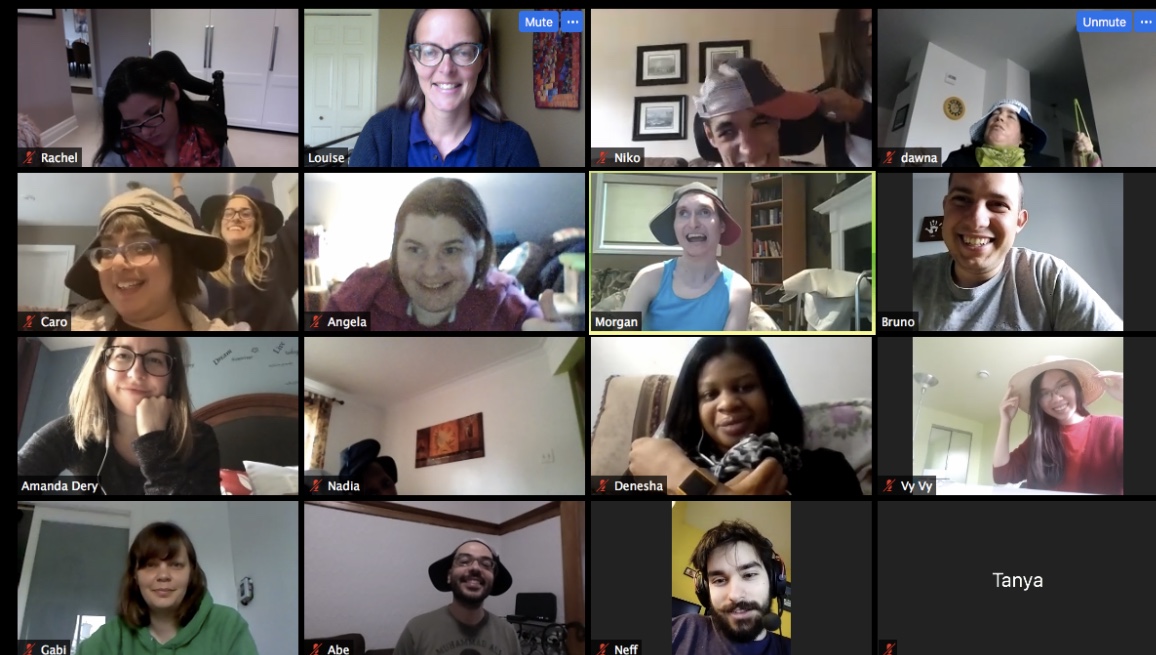
The C.A.R.E. Centre, a recreational organization for adults living with severe physical disabilities, recognises the importance of art and expression for their clients, particularly for those clients who are non-verbal. In addition to incorporating art-making into daily programming, C.A.R.E. has hosted a number of artist residencies with Teaching Artist Louise Campbell, who has facilitated projects ranging in duration from 4‑days to 6 months, giving Louise, the clients and the caregivers an opportunity to get to know each other, and perhaps more importantly for Louise as a guest artist to understand the program and clients’ modes of communication.
The most ambitious of these projects was also the most surprising : the podcasting project Stories of Care was slated to begin in person at the C.A.R.E. Centre on March 23, 2020, ten days before the coronavirus pandemic was declared in Canada. Luckily, podcasting is an ideal project to do at a distance. In addition, one of the most beloved programs at C.A.R.E. is C.A.R.E. Radio, which converted well to Zoom. Caregiver Bruno moved seamlessly into being a fabulous host, just as he is in person at C.A.R.E. The online video platform became the bridge to our clients and a way to move forward with the podcasting project.
What really made this podcast project fly was Executive Director Olivia Quesnel’s amazing ability to think creatively about how to connect with people. As a regular part of her job, Olivia cultivates connections and communicates with C.A.R.E. clients using multiple platforms, adapting to each client based on their abilities and home situations. Just one example of Olivia’s creative use of standard technologies is her phone conversations with a client who is non-verbal. Olivia set up a daily phone call with during which she asked yes-no questions, to which he responded by pressing the touchpad once for ‘no’ (beeeeep) and twice for ‘yes’ (beep-beeeeeep!!).
Using the communication platform that was most appropriate for the client, a series of questions was used to prompt clients to talk, reminisce and share stories. One of these questions was ‘what do you hear around you right now?’ Clients’ observations were recorded and compiled in Episode 3 : Here and there. A combination of archival recordings, short instructional videos of at-home recording activities, and recorded phone and Zoom calls, and musical gifts created by musicians Louise Campbell, Amy Horvey and Tim Brady gave us what we needed for a podcasting series : audio material !
Each of the podcasts was made in collaboration with C.A.R.E. clients and staff, with episodes being published and shared once final approval was given by Olivia and/or the appropriate client. Client involvement included recording audio to very detailed editing and authorship by C.A.R.E. Centre client Rachel and her caregiver Mischa in Episode 5 : Tobii Stories, a Day in the Life of Rachel to an episode crafted as a gift from the musicians and caregivers to a client who was very isolated due to her living situation in Episode 6 : Bliss, Communication and Giota’s Song
Of this project, Artist-in-residence Louise Campbell says, “I will remember and treasure this project for what I have learned about the power of human connection – that is, our ability and drive to connect with the people we care about.” C.A.R.E. Centre Executive Director Olivia Quesnel says, “Individuals with disabilities have so much to communicate and are very moved by sounds and music. The opportunity for our non-verbal clients to work with artists and musicians to create podcasts and to tell their stories is exciting. This project enabled those who often are not heard to express their thoughts and share their experiences.”
As Bruno would say at the end of a C.A.R.E. Radio episode : Stay tuned next time for more Stories of Care. Peace !
And the chatter begins from the clients and family : That was so fun ! I loved your jokes ! Are you coming to the Zoom dance party tomorrow ? Hey, can we do a Zoom call later ? Bye, everybody ! See you next time !
Stories of Care is produced by the C.A.R.E. Centre, Innovations en concert, Bradyworks, with funding from Quebec’s Schools Host and Artist of Culture in Schools.
Facilitation, conception & montage by Artist in Residence Louise Campbell.
GOAL : to develop a deeper appreciation of music and the visual arts and how they compliment each other. In this particular workshop, participants were inspired by the music of Jabbour, using the music as a spark for their art.
ACTIVITY : Art making is enriched when layered with a variety of experiences and techniques.
First, a musician(s) presents their history and music, exchanging ideas that add another layer to the creative process. In this case, Guillaume Jabbour describes his band, which includes Bill Gossage, Carl Rufh and Bill Collier. The group’s identity solidified during their tour of British Columbia in 2015, when the musicians began to understand that they had found their place on the Canadian folk music scene, identifying themselves particularly with the official language minorities of the country : the English-speaking communities of Quebec and the French-speaking communities of Canada. Refer to the video for how Guillaume does this.
Next, we learn about the art technique to be used in drawing and painting. Then we listen to the music and draw. Finally, we reflect and get and give feedback. Next time, choose another musicians’ work to inspire your creativity.
Outcomes :
deeper listening
heightened senses
increased awareness of the connection between music and visual art.
ease, confidence, and joy in listening to music and creating art.
deepened relationships amongst group members through shared experience and sharing artworks.
a greater sense of connection and ensemble with artist, musician, and participants.
MATERIALS : paper with pencil, crayons, coloured pencils, markers, oil pastels etc. and or paint and brush.
PROCESS :
Listen to the music while thinking about the theme, Passage Through Time. What does it make you think about ? What images or memories come to mind ? Using the music and the theme as inspiration, create a narrative drawing – a drawing that tells a visual story.
Let us draw. I am using the example of drawing with a pencil. Pencil marks, Composition, Abstract and figurative are concepts in painting and drawing. Refer to the video for examples. You choose your materials of choice. Here are concepts to consider :
Pencil marks – Experiment with the side and point of the pencil, increase, and decrease pressure. You can create light, medium, dark, thin, and thick lines.
Composition in a drawing is the ‘what am I going to put and where am I going to place it on the paper’. When playing with composition, remember that drawings can pass the edges of the paper and overlap other papers.
In drawing and painting, abstract or non-figurative is based on shape, texture, colour, and value (light and dark). Figurative is based on a person, place, or thing. Figurative abstraction is a combination of the two. Perspective – Objects that are closer usually start at the bottom of the page, are bigger with more detail and colour. The opposite is true for objects that are further on.
3. As you draw, periodically stop the music, share thoughts, ideas and in process artwork to inspire each other.
4. When the music and artworks are finished, share them and discuss.
You can pick any of Jabbour’s music as an inspiration for visual creation. Listen to the music, what will you draw ?
« Listening to the music was like taking a peek into someone’s life. I described it as « dancing through life ». The drawing started with a bean (a coffee bean!) and evolved into a rainbow dance bursting with new life. I really enjoyed the art music class today. » Shannon, workshop participant
*Please contact Deirdre at deirdre@artwill.ca if you’d like to know more about the project.
Les Fruits · Jabbour ℗ 2019 Jabbour Released on : 2019-05-13 Auto-generated by YouTube : https://youtu.be/QGuonIekvG4
Honey · Jabbour ℗ 2018 Jabbour Released on : 2018-04-13 Auto-generated by YouTube : https://youtu.be/QGuonIekvG4
He Doesn’t Need You Jabbour Album Round the Clock Licensed to YouTube by CD Baby (on behalf of Jabbour), CD Baby Sync Publishing : https://youtu.be/Jn8RpaTQAvE
These Presence Warmups prepare the body, breath and mind for expressive and creative music-making. They are most effective when used at the start of a rehearsal and can easily be incorporated into choral warm-ups, lessons, or your individual daily practice. They support body awareness and increase presence by connecting body, breath, sound and space.
The exercises are inspired by and have been adapted from Body Mapping, Alexander Technique, Qi Gong, Continuum Movement, and sound healing.
For more information, contact Dina Cindric at dinacindric@gmail.com.
1. CONSTRUCTIVE REST GUIDED MEDITATION (3 mins.)
Constructive Rest is an effective tool used by Alexander Technique and Body Mapping practitioners to – among other things – release tension from the body and develop awareness.
It is normally done lying on your back and can take 10–15 minutes. I have adapted it here, combining elements of Alexander Technique and Body Mapping, into a shorter 3‑minute guided meditation that can be done in a seated position (or adaptable for standing), making it suitable for the classroom, community centre, or rehearsal studio.
I begin all of my choir rehearsals and piano and voice lessons with a variation of this guided meditation and have witnessed the positive effects it has on my students in mind, body, and expression. Use the audio guide below to get you started !
2. DRAWING DOWN THE HEAVENS (2–5+ mins. )
This exercise comes from the practice of Qi Gong which is an ancient Chinese exercise technique that involves coordinating movement, breath, and mind to promote the free flow of energy around the body.
It is a perfect opening warmup as it quiets the mind, increases energy and focus, aligns the body, and connects body and breath.
INSTRUCTIONS
Stand comfortably with your feet shoulder-width apart, knees soft, arms at your sides.
Feel your feet balanced and firmly planted on the earth. Allow your spine to lengthen. Take a moment here.
Inhale and float the hands out to the sides, shoulders relaxed. Imagine you are drawing energy from the earth into your body.
Rotate the wrists, hands facing up to the sky. Bend the elbows.
On the exhale, the palms wash down in front of the body. Imagine you are letting go of any tension, worries or stress.
Repeat the exercise 3, 6, 9, or 12 times.
3. WATER PLAY (15+ mins.)
”Water Play” is inspired by Continuum Movement. Continuum Movement is a practice that uses movement, breath, the resonance of sound and meaning. From Emilie Conrad, founder of Continuum Movement : “We are basically fluid beings that have arrived on land… All living processes owe their lineage to the movement of water.”
This exercise explores movement as imagined in, through and as water. It is possible to do the exercise in a shorter period of time, but it is most effective when allowed as much time as needed. Give yourself 20 minutes or more the first time you do it. The next time you do it, your body will recall what you did and you will find you’ll be able to dive into the work more quickly and deeply.
Your movements can be as big or as small as you like : from raising an arm or leg and exploring the entire space around you, to simply a sigh of the head or a release of a hand. Play. Explore. Enjoy the process and marvel at the beauty of the fluid being that you are !
See scores for instructions. Read all of the instructions before you begin. The exercise can be done seated or lying down.
4. BODY HUM (10+ mins.)
The “Body Hum” is inspired by both Continuum Movement and other sound healing practices. It uses sound – a gentle hum – to send vibrations through to areas of the body to retune it.
The vibrations will be more deeply felt if the exercise is done following “Water Play” but it can also be done on its own.
See scores for instructions. Read all of the instructions before you begin. The exercise can be done standing, seated or lying down.
The project Moi_Espace Public was born out of a conviction that artistic creation can be a fruitful space for exchange on everyday issues, whether emotional or social. My desire was to meet and exchange with people, and facilitate their artistic expression on two vast and complex subjects : public space and the experience of women in our current society. As a musician interested in interdisciplinary, the project is based on the creation of audiovisual works in the broadest sense of the term.
STRUCTURE :
Before the development of the project
1.Based on prior research, I thought about the themes I would like to address.
2.I chose the angle of both themes to be addressed, in my case the personal experience of women in public spaces chosen by each participant. I wanted to learn about the experiences of different women in these spaces and how they perceive themselves in those spaces.
3.I elaborated a score-text-guide to incite the creation of the audiovisual pieces without narrowing the conceptual and aesthetic angle of the project. I intended to work with women from different backgrounds (cultural, generational, etc.), professions and artistic visions. This score is composed of an 8 steps creative process. (See the score below)
Practical part of the project
1.Discussions (Steps 1 to 4 in the score):
I chose some phrases and questions that would motivate conversations about the common themes of the project. The order of these items in the guide were chosen to move from a general to a subjective scope in conversations with participants :
a. In 1, I chose sentences from a literary work important to me whose author, the French philosopher Henri Lefebvre, speaks about the production of public spaces. These sentences allow me to introduce the central question of the project and to begin to stimulate personal reflection on this theme.
b. In 2, 3 and 4 I have created questions to invite people to place themselves in the center of the theme and approach it in a personal and objective way according to a daily or punctual experience. Usually, people are immediately interested in a personal theme. If this is not the case, I invite them to tell me more about a particular personal experience, their work environment, the paths they make every day or the spaces they often visit, in order to choose an angle to explore in the project.
It is at these stages that I take the opportunity to get to know each person better : where they come from ? Who do they live with, what is their work ? What do they do outside of work ? I let them share as much as they want, and I explain that they can also hide from me as much as they want. I use this time to share personal experiences and thoughts of mine as well. On the practical side, these conversations also serve as a tool to help me in the creative part of the piece : once I know more about people’s feelings and preferences, I can suggest some strategies in case they feel lost later in the process.
2.Turn these thoughts into art material (Step 5–7 in the score):
a.As I enter the more practical part of the project, I ask people to find visual and audio materials that represent the ideas from the previous steps. I take advantage of this time to find out what their relationship to art is, what kind of art, music, movies they like, etc. From these conversations I get tools that help me stimulate their creativity, in case they feel stuck at some point and need help for the work to come to fruition. I let each person come up with their own ideas by accepting everything : references to famous works, personal photos, images from the internet, memories, sound effects, etc. To help them unlock their imagination, I can give some examples based on what I know about that person or even give personal examples of my own that might relate to what they are trying to express. If the person feels blocked, I don’t hesitate to offer one or two ideas as a start and then let them develop that idea. For example, if the person likes to draw, I can suggest that they start working on a drawing they have made that relates to the theme of the work. If they like poetry, I can suggest that they write sentences and choose keywords as references for the images and sounds to record.
b.Once we have the materials, I ask them to create a skeleton, a structure for the piece such as an order of sections, a main theme to explore, materials that can overlap each other, or a beginning, middle and end of an idea.
c. I then ask people to reproduce or find and record these sounds and images. In some creations, the material was reproduced or collected by the person themselves with whatever means were available to them (their own instrument, images from the internet, recordings and filming with their phones or personal cameras and recorders). In other cases, I used my own equipment (recorder, microphones and camera).
Smartphones can be a good tool for taking sound and images. Some cameras (such as Go-Pros) and recorders (such the Zoom brand) have a relatively accessible price and interface. Finally, there are different websites where images and sounds can be downloaded for free (it is important to note the type of license granted by each website):
To complete the work, I ask people to experiment with putting the material produced in step 7 into the previously thought-out structure. If the context allows it, ideally, each person can make their own work independently. I advise them to be prepared to adapt the structure or material and refine it to their liking. If the context does not allow for each person to finish their own work alone, I can support them technically or creatively.
About the tools for this step, there are also some free editing softwares that are adapted to all operating systems like Open Shot. In addition, the Davinci Resolve software offers a free version with many possibilities for sound and visual editing.
See the website or YouTube for tutorial videos to introduce these programs.
4. The distribution of the works
In order to diffuse these works to the public, I have created a web page dedicated to the project. In addition to being able to watch the videos created within the project, everyone has access to the score-guide available in French, English, Spanish and Portuguese.
Below you can see the score of the project as well as the main ideas and results of the work done by Chantal Garcia and Marianela Rey.
This Audio Scavenger Hunt involves finding sounds from a list, reporting on them, and discussing what the sounds mean to you. Sounds are searched out and checked off a list. Then to report back, participants use their own voice or body to replicate the sound. For a slightly tech heavier experience, sound capture can be done on a phone or voice recorder, edited, shared and discussed.
Extension : Upload sounds to an editing application like Garageband or Reaper and edit to make an archival piece capturing your sound scavenger hunt. Adaptable up to secondary school students.
How can listening carefully to the world make us feel ? (e.g. you might feel calm, notice something new, or notice a sound you don’t like and would like to change)
Walk around your house, school and/or outdoors and try to locate the sounds on the checklist.
When you find a sound, listen for a few minutes and then use your voice or body to copy the sound. Practice a few times so you remember how to do it later when you report back.
If you are using a phone or voice recorder, record the sound. For more info on that, watch this video.
Step 2 : Report Back (30 – 60 min.) (for ages 5+)
Take turns presenting your found sounds using your voice and body. Talk about what they made you think of and how they made you feel.
Here is an example of participants sharing their sounds.
If you have recorded sounds on a device, you can take turns playing them back.
If you wish to edit your recordings using Garageband for ios, or a DAW (recording software) on a computer, keep reading.
Taking it Further
Editing/Mixing the Audio in Garageband for ios devices (60 – 90 min.) (for ages 10+, slightly advanced)
For more information on this, visit the Audio-Visual Mismatch lesson, another project on this site designed by me or refer to this video from 1:46 to 4:38
Editing/Mixing the Audio in Reaper on your computer (60 – 90 min.) (for ages 13+, advanced)
This video shows how to install Reaper. Note that Reaper is free to use until you decide you would like to purchase a membership. You can use the free version for as long as you like.
Now you will have to get your files off your phone and onto your computer. There are many ways to do this. Here are a few :
Transfer files from your phone to the computer using a USB cable.
Email your files to yourself, open the email on your computer and save the files to a folder that you will remember.
Use Air Drop (for Apple Users) to send the files directly to your computer.
The following steps are illustrated in this video.
Wear ear buds, air pods or headphones and use your ears to edit the track until you are happy.
Open Reaper.
Drag your files into Reaper and begin editing.
Trim your track to get rid of extra noise.
Use fades at the beginning and the end to make it sound smoother.
Use Panning to send your audio signal to the left or right.
Use the Equalization (EQ FX) to bring out the high, middle and low frequencies of your audio track.
Use Reverb to enhance your track.
Once you are happy with your track, click File > Render > Next to File name, rename your project to something that makes sense (e.g. Guillaume-AudioScavengerHunt-2021).Then, next to Output Format, Choose MP3 (encoder by LAME project). Finally, click Render 1 File.
Then you can send the file in an email, save it to Google Drive or simply play it from your computer.
To learn more about Reaper and follow their excellent video tutorials, click here.
Below are some examples of pieces made by high school students during a similar project
ACTIVATE : Young Composer Program is an adjudicated composition program presented by The Alliance for Canadian New Music Projects (ACNMP) and Canadian Music Centre (CMC).
ACTIVATE is an early entry point for young artists (25 years of age or younger) exploring composition and sound : in particular those who are not working/studying in a professional context, and would therefore want to access different forms of mentorship and opportunities to hear their music performed by professional musicians. ACTIVATE participants will gain new skills, and have opportunities to connect with a peer group from across Canada.
The 2020 edition featured adjudicator and composer mentor Anna Höstman as well as violinist and composer Aline Homzy.
Submission Criteria :
All applications were submitted through an online form (along with the score and sound file of the submitted work)
Adjudicated pieces could be in any medium (for any instrumentation, including electronics), and have a duration from 2 to 10 minutes
To be considered for the reading session, composers were required to submit solo or duo works, or fixed electronic pieces for stereo playback, that meet the duration criteria. If a piece is written for solo or duo instruments with fixed electronics (stereo playback) it will be considered for the reading.
Program Experience :
Adjudicated composition class :
Each composer received a short written adjudication from Anna Höstman or Aline Homzy in response to a submitted piece of music (addressing technical and artistic aspects of the work, with some recommendations for further development in each young composer’s practice)
Adjudicator comments provided a balance of encouraging/positive remarks, with constructive feedback regarding technical and compositional matters. In particular, adjudicators were encouraged to direct composers towards listening or score samples from contemporary composers active today.
Reading session with guest musicians :
Anna Höstman, along with ACNMP and CMC organizers, will select up to six (6) of the adjudicated works to be included in a professional reading session with guest musicians performing the works.
Composers would access the reading session remotely using an unlisted livestream link, and a video conferencing application to facilitate real-time interaction.
Composers selected for the reading session will receive a professional audio recording for personal reference
Every applicant from the adjudication stage will be invited to audit the reading session.
There will be an opportunity for participating composers and those auditing to discuss their music
*If you are interested in submitting a composition to our next ACTIVATE program, here are a few tips from Anna on how to get started :
begin in one scale and gradually move to a different scale by the end of the piece
create a piece through combining two scales ‑one to be played in low register 1st octave, the second to be added above in the 2nd octave
compose a canon
compose using a single pitch
create a rhythm composition where pitch is indeterminate (left up to the players)
find any kind of noise-maker (or several) and make a duet for noise-maker(s) and instrument (eg. egg beater & clarinet)
ask an instrumentalist or singer to show you a few extended techniques and include one or two in your piece
Songs that Connect Us is a community-engaged project for collaborative and meaningful group singing using storytelling and song. It fosters open communication and a respect for diversity.
The project was initiated by choral director Dina Cindrić and the RECAA Choir – a community choir composed of elders from the ethnic communities of Montreal, many of whom belong to the community organization RECAA : Respecting Elders Communities Against Abuse.
Participants are asked to think of a song that brings them a sense of connection. At the next meeting, they are invited to share their stories and songs, which are recorded. Over the course of the following sessions, participants work together to learn the songs.
This project can be used to encourage dialogue on issues important to the community, or it might inspire collaborations with other community or cultural groups. Stories and songs can be presented in performance or use them as content for digital storytelling projects.
The project :
Deepens relationships
Facilitates self-expression and leadership
Opens dialogue
Gathers stories
Fosters teamwork and collaboration
Fosters a respect for diversity and inclusiveness
Provides a space in which participants can safely share their histories, cultural expressions and individual voices
Promotes learning
Encourages mindful listening
Builds confidence
Download the project workbook in the sidebar for tips on how to :
Words and Rhythm have a really close relationship since ancient times when poets sang the epic tales in iambic pentameters, both to better remember and more easily sing them. Words contain rhythm. We produce rhythms every time we talk, although we do not realize. This activity guides participants to pay attention to the rhythm underpinning their words and uses their rhythm as building blocks for a group composition. Such rhythms will be explored, varied and modulated in order to build polyrhythms and polyphonic melodies.
GUIDING PRINCIPLES
Often participants do not perceive themselves as capable of improvisation, simply because they are not used to it. This perception can become in itself an obstacle.
The exercise Words&Rhythm is designed in such a way to skip the problem, initiating people into a creative process without them even realizing it. The process aims to guide their way of listening to recognize the responses that their body and mind produces naturally to music and then express them through the voice.
In fact when listening, our minds and bodies always respond to music, through resonance. We can see images in our imagination. We tap our feet on the floor. Far memories are awoken. I believe that such personal responses are a mirror to our unique life experiences, the root of our own voice. The goal of this exercise is to express and amplify such responses.
Each individual is guided to use his or her own unique toolbox (the musical skills and techniques that each individual already possesses) to give voice to what their bodies and minds already sing.
I believe that such activity can contribute to a more musical society : one where people can communicate more personally and authentically because tuned to their bodies and their singular experiences.
Before starting the improvisation work, the body first needs to be warmed up through stretching and dancing.
MATERIALS NECESSARY TO CARRY OUT THE ACTIVITY
A pen and a letter-size paper for each participant
Music player with three suggestive songs of different character
Optional : loop pedal, microphone and speaker
STEPS
Preparation :
Participants gathers in groups of 4 (three singers and a witness alternating roles);
The process of creation begins with a free-writing exercise:Three songs of different and contrasting characters are played in succession (1–2 min for each). While listening to the music participants are asked to produce three brief texts in response to each of the songs. Each participant is encouraged to use his or her own mother tongue. The texts will provide the rhythmic materials for the group composition ;
NOTE : It has been chosen this free writing activity instead of, for instance, simply picking up words from a text to introduce participants right away to a process of creation as response. In fact, responding to sound, responding to the voice of the other is one of the guiding principles of this activity.
First Phase : Just the Rhythm
Each participant will choose 4 words from their text. By repeating one word after the other in a loop, they will make apparent the rhythmic pattern underpinning the words ; order of the words, speed of execution, pauses can be modified to explore different possibilities ;
The first singer of each group repeats his or her words in a rhythmic Phrase and loops it. The phrase should be repeated with ease, leaving appropriate pauses for breathing and maintaining the loop without variations ;
The second singer will join in, superimposing their words on top of the first singer, finding a way of interlocking them. The second singer starts his or her phrase simultaneously with the first singer (phasing phrases could be explored in variation of the activity);
The third singer will join adding a third layer in the same way. The result is a poly-rhythmic pattern ;
The fourth participant works as a witness of the process, who can also record the result on a cellphone to keep record of it. When the process is completed, the participants switch roles and start from the beginning ;
Second Phase : Melodies
The first singer will start from the beginning, this time adding tones to the words ;
The rhythmic phrase becomes a melodic phrase, repeated in loop. If the singer is inexperienced, is invited to sing the rhythm in a single tone. For some magical reasons, after a couple of repetitions, some modulation in the tone will naturally appear, as if a melody were suggested by the rhythm of the words itself ;
NOTE : Even when the singer is a proficient improviser, the first layer should be purposefully easy, so to provide a balanced mix of support and inspiration for the second singer ;
The second singer, drawing inspiration by listening to the first, will produce a second voice that grafts onto it. The phrase of the second singer starts at the same time as the one of the first singer. If the singer finds it challenging to articulate his or her phrase, the leader can suggest a pitch that the singer can use to sing the phrase. By reproducing the words in that tone, usually a melody will be shaped by the relationship with the one of the first singer ;
The third participant is free to use his or her words more freely in a solo that enfolds on top of the basic loop. The third singer is also the conductor of the performance. He or she can raise or lower the volume of the other singers and close down the improvisation ;
FURTHER DEVELOPMENTS
The form of the exercise is close, as the phrases provide a clear structure to the composition. The performance could be enriched with a middle section of free and more disorganized improvisation on the words to then resume the original pattern ;
It is possible also to extrapolate just the rhythms of the picked words and transform it with other syllables ;
A really entertaining tool that can be employed in the exercise is the loop pedal. The loop would allow each participant to record their own voice instead of repeating it continuously.
Piece of Mind uses the performing arts to synthesize and translate knowledge about Parkinson’s disease (PD) and dementia. Our participatory research-creation project brings together artists (circus performers, dancers, musicians, visual artists), researchers, individuals living with PD or dementia, and caregivers to co-create artistic works based on scientific research and lived experience. The overall goals are :
1) to facilitate knowledge creation and exchange between the seemingly disparate communities participating in the creative process ; and
2) to create performances that can engage a wide audience on both an emotional and intellectual level, and spark meaningful conversations around PD and dementia.
We use an emergent and iterative process to identify the key themes and messages to communicate in our performances, and to ensure that multiple perspectives are incorporated along the way. Our research process has included numerous virtual workshops, facilitated discussions, and movement/music sessions to build relationships and explore both scientific and lived experience knowledge through creativity and embodiment. Rather than present a summary of the various activities we’ve undertaken, we’d like to share two examples* that could easily be applied in different contexts.
*You can find our other example here : https://www.newmusicnetwork.ca/projects/piece-of-mind-connecting-scientific-research-and-lived-experience-through-music/
ACTIVITY : creating a participatory soundtrack to an art-science video.
GOAL : the purpose of this activity is to facilitate conversation and understanding of PD research by having participants interact directly with an “art-science” video and one another. Specifically, participants created a soundtrack together through collective vocal improvisation for a short video illustrating the importance of community support and movement for people with Parkinson’s disease.
WHERE : via Zoom (or a similar virtual platform) or in person
PARTICIPANTS : in our project, the participants were researchers, performing artists and people living with Parkinson’s disease. The process can easily be adapted to other target audiences.
GROUP SIZE : the more the merrier — but also the more chaotic your resulting soundtrack ! We suggest a maximum of 10 participants.
INSTRUCTIONS :
Step 1 – create a short video on your topic of interest, or use our linked video with the sound on mute.
In our case, two researchers studying Parkinson’s disease (Rebecca Barnstaple, Joe DeSouza) and a circus performer (Jérémie Robert) collaborated to create this silent video sketch based on the researcher’s findings about the therapeutic potential of community support, movement and music. While the ‘finger acrobat’ was very quick and easy to film (and conveys a surprising amount of emotion!), you could also film a dance, movement improvisation, dramatic scenario, or whatever else you wish !
Step 2 – Co-create a soundtrack (30 min – 1 hr)
Present the video to the participants. You can choose whether to share the scientific context behind the video right away, or let this come out in discussion afterwards.
Invite participants to unmute themselves (if done virtually) and to make the sounds they feel should accompany the finger tightrope walker. This can be done using voice, snapping, clapping, using found objects, etc.
To avoid a cacophony (unless that’s what you’re going for!), encourage participants to listen and respond to one another, or limit the number of people making sounds at any one time.
We suggest going through the video several times, trying out different ideas each time. For instance, in our video, we tried making sound effects that were the opposite of our first reaction to the finger acrobat, which was quite an interesting experience !
If you plan to record and edit the results into a soundtrack, consider having only one or two people participate at once. This will make it easier to put everything together afterwards.
Step 3 – editing (optional)
If you would like to compile a soundtrack for your video from the audio recordings of your participatory session, upload everything into your editing software of choice. You can play around with how to combine the different soundtracks for the final piece — you could even do this part as a group.
DESCRIPTION OF THE ZOOM CLIP :
In this clip from our Zoom session, musician Louise Campbell guides us through an exercise in which we provide sound effects for the “finger acrobat”. We show two versions, one in which we responded with the sounds we attribute to the emotions expressed in the video, and the second one in which we played with the perception of the video by changing the sounds we provided for the finger acrobat.
DESCRIPTION OF THE ART-SCI VIDEO :
Hand : Jeremie Robert
Researchers : Rebecca Barnstaple & Joe DeSouza
Sound : Members of the Piece of Mind Collective
Video Edit : Rebecca Barnstaple
Sound Edit : Louise Campbell
Accompanying text by Rebecca :
Music and dance are increasingly popular in programs for people living with Parkinson’s or Alzheimer’s disease, providing support for movement, social connections, and a place to express and connect with others. Links between sound and music are ancient, and dance can be thought of as “sound-made-visible”. Rhythm and melody interact with the auditory cortex and motor planning areas of the brain, and music can inform and trigger how and when we move — leading to fluidity, synchrony, and greater range of motion. This piece expresses how the environment of a dance class, replete with music, imagery, and social connections, can lead to the experience of moving as a “dancer”, capable of strong and graceful movements that transcend the ordinary.
* Please contact Naila at pieceofmind.montreal@gmail.com if you’d like to learn more about this project ! *
Lorem Ipsum is simply dummy text of the printing and typesetting industry. Lorem Ipsum has been the industrys standard dummy text ever since the 1500s, when an unknown printer took a galley of type and scrambled it to make a type specimen book. It has survived not only five centuries, but also the leap into electronic typesetting, remaining essentially unchanged.
Step 2
Lorem Ipsum is simply dummy text of the printing and typesetting industry. Lorem Ipsum has been the industrys standard dummy text ever since the 1500s, when an unknown printer took a galley of type and scrambled it to make a type specimen book. It has survived not only five centuries, but also the leap into electronic typesetting, remaining essentially unchanged.
×
Étape 1
Lorem Ipsum est tout simplement un texte factice de l'industrie de l'impression et de la composition. Lorem Ipsum est le texte factice standard de l'industrie depuis les années 1500, quand un imprimeur inconnu a pris une cuisine de type et l'a brouillé pour faire un livre de spécimen de type. Il a survécu non seulement à cinq siècles, mais aussi au saut dans la composition électronique, demeurant essentiellement inchangé.
Étape 2
Lorem Ipsum est tout simplement un texte factice de l'industrie de l'impression et de la composition. Lorem Ipsum est le texte factice standard de l'industrie depuis les années 1500, quand un imprimeur inconnu a pris une cuisine de type et l'a brouillé pour faire un livre de spécimen de type. Il a survécu non seulement à cinq siècles, mais aussi au saut dans la composition électronique, demeurant essentiellement inchangé.